Showing posts with label India. Show all posts

Friday, 24 July 2015

Military History Photo Friday: WWI Indian troops cooking on the Western Front

 
This is an interesting image of World War One you don't generally see--some Indian cavalry troopers cooking a meal. It was taken in Estrée Blanche, France, on 25 July 1915 and is part of a massive collection of images the British Library has uploaded onto flickr. The collection, numbering more than a million public domain images that are totally free to reuse, spans every subject imaginable from old maps to children's books. It's an amazing resource for researchers, indie authors, and pretty much everyone else.

As I mentioned in an earlier post about Indian troops in World War One, the British colony contributed some 1.5 million men to the war effort. One wonders if the guys in this shot brought along some curry powder from home or if they were stuck eating the bland fare everyone else had to deal with!

You can get a large-format copy of this image here.

Friday, 24 October 2014

Military History Photo Friday: Indian Troops in World War One

This week's photo shows Indian troops on the march somewhere in France during World War One. India was still a British colony at the time and contributed 1.5 million men to the war effort. They fought in every theater of the war. The Indian troops weren't the only colonial troops. Every colonial power drew upon their overseas possessions for the war effort. I've written about this more at length, and with some cool photos, over at Black Gate.


Image courtesy Wikimedia Commons.

Sunday, 22 December 2013

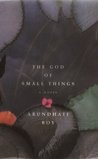
Book Review: The God of Small Things

The God of Small ThingsThe God of Small Things by Arundhati Roy
My rating: 3 of 5 stars

I was prepared to love this book. I'm a big fan of Indian literature and had heard many good things about this title.
I found it to be a mixed bag. While the writing was lush and beautiful, many passages were overwritten. Arundhati Roy is one of those writers who can't resist using five similes when none would suffice. Sometimes they border on the ridiculous, such as when she describes a smell coming off the river and "hovering over the city like a hat." Since when do hats hover? Sometimes they just don't make any sense, such as when she says "shock swelled in her like phantom applause in an empty auditorium."
The story jumps back and forth in time, a useful narrative device that can increase the power of a story. It doesn't here. Roy also falls into the common trap of literary authors by having everyone talk like literary authors. Even the child characters, whose dialogue is usually wonderfully childlike and distinct, sometimes slip into speaking like some English graduate student at Oxford.
This is a shame, because there's some lovely writing here and a compelling narrative. If Roy had toned down on the literary trappings this book would have been far more effective. As it stands, reading The God of Small Things is like being served a beautiful slice of Black Forest cake. It looks exquisite, smells tempting, and then you take a bite and find the chef added twice the sugar the recipe called for.

View all my reviews

Friday, 29 November 2013

Military History Photo Friday: The chakram, deadly frisbees of India

No, these aren't toys, but they did inspire those Aerobees that we played with as kids. These are Chakram, an Indian weapon. They're razor sharp on the outside, generally about 5-10 inches in diameter, and are thrown (carefully) like a Frisbee or twirled on the forefinger and then released. Accounts say Indian warriors could throw these long distances with great accuracy. Medieval Indians understood aerodynamics and made the bottoms flat and the tops curved like with the wings of an airplane.

It's unclear when the Chakram was first invented although it's certain they're very ancient. They were mainly used in northwest India, especially by the Sikhs, who continued using them into the 19th century. One account mentions street criminals using small chakram in Calcutta as late as the 1940s.

While the chakram were long-lived as a weapon, I'm not surprised they didn't spread to a wider area. Like many unusual weapons, the chakram was trying to replicate something that could be more easily accomplished in another form. A bow is easier to use and deadlier, which is why you can find bows in pretty much every culture. These are neat, though! Anyone want to practice with one and get back to me?

Top photo copyright Sean McLachlan. Taken at the Pitt-Rivers Museum, Oxford. Bottom photo courtesy Wikimedia Commons.
Looking for more from Sean McLachlan? He also hangs out on the Civil War Horror blog, where he focuses on Civil War and Wild West history.

You can also find him on his Twitter feed and Facebook page.