Showing posts with label book reviews. Show all posts

Wednesday, 14 February 2018

Book Review: Look and Move on by Mohammed Mrabet

Look and Move OnLook and Move On by Mohammed Mrabet
My rating: 4 of 5 stars

Mohammed Mrabet is a Moroccan writer and artist who has lived most of his life in Tangier. This is his memoir of the days when it was an international haven for writers, artists, thieves, con men, homosexuals, pederasts, and the idle rich. Like For Bread Alone by Mohamed Choukri, it shows the flip side of this foreigner's paradise, the life of poor Moroccans struggling to survive and often having to serve the newcomers in various unpleasant ways.
Mrabet didn't escape this. At the age of sixteen, he got taken up by an American couple who vied with each other for his sexual favors. They take him to the U.S., where he has more fun with the local Puerto Ricans and blacks than he does with the staid middle class whites. There are some hilarious scenes of culture clashes in these passages. Later he meets Paul and Jane Bowles, who launch his career as a writer. They, too, take him to the States with similarly numerous results. We also get to follow Mrabet's adventures with European swingers, falling into matrimony, and his rather Zen philosophy of life.
While I found this slim volume fascinating because I've spent a lot of time in Tangier and read a great deal about its history, someone who isn't a fan of the place will miss a lot of the references. For example, Marguerite McBey is mentioned but nothing is said about her important place in Tangier society. I hope this work is republished with a long introduction to explain the context to those readers who have not learned about it from other sources.

View all my reviews

Monday, 22 January 2018

Book review: Baby Moll by John Farris

Baby Moll (Hard Case Crime #46)Baby Moll by John Farris
My rating: 3 of 5 stars

This is the first of the Hard Case Crime series I've read. The series has made a name for itself by republishing lots of great but nearly forgotten noir gems. In this book, Peter Mallory, our antihero, has left the mob behind to start a new law-abiding life. He's got it all--a shop by the beach in California, a house, a rich and beautiful fiancee. But then the mob pulls him back, as the mob always does in these books, and he has to help his old boss solve a series of murders--someone is picking off the mob boss's subordinates ones by one and he's convinced the list will end with him. Because the boss is Peter's father figure, he reluctantly agrees to help.
At this point the narrative slows. Much time is spent in the mob headquarters, a beachside bungalow filled with a variety of lost souls. They all have their hangups and madness and they all drink way too much. They also don't seem to do much of anything else. Everyone knows the boss is losing his grip on the territory and is terrified of the mysterious murderer, giving the place a sort of Hitler's bunker feel. While this is effective, there's such a large cast of misfits we don't get to know any of them terribly well, and entire chapters go by without Peter doing anything to solve the murders.
The final third of the novel speeds up considerably as Peter gets out into the world more. He writes about he seamy side of the 1950s brilliantly, showing the poverty, ignorance, and brutality that Hollywood films of the era tended to ignore. There's also an epic fight scene that's handled very effectively.
While I enjoyed this novel and will definitely pick up more from Hard Case Crime, the pacing on this one was too uneven to give it four stars.

View all my reviews

Wednesday, 14 December 2016

Book Review: Days, A Tangier Journal

DAYS TANGIER JRNLDAYS TANGIER JRNL by Paul Bowles
My rating: 3 of 5 stars

This short work only took me two good sittings to get through but I enjoyed it. Paul Bowles spent much of his life in Tangier, and near the end of his sojourn wrote this journal. It contains some interesting observations of Arab life and the lives of the various oddballs who passed through Tangier, all written in the author's inimitable style. You need to be well-versed in Bowles and Tangier history to catch all the references, however, so this is a book more for enthusiasts rather than the general reader. Someone exploring Bowles beyond The Sheltering Sky would be better off checking out his other novels and short stories.

View all my reviews

Thursday, 27 October 2016

Book Review: Islamic Art by David Talbot Rice

Islamic ArtIslamic Art by David Talbot Rice
My rating: 3 of 5 stars

This is a classic and much-reprinted primer on the highlights of Islamic art. I got the 1975 revised Thames & Hudson edition for free at a library giveaway (yippee!) so this is the edition I'm reviewing. I found the text clear and wide ranging. While it didn't go into as much detail as I would have liked, this is meant as a short introduction to a huge subject and does that quite well. I've studied Islamic art in a casual way for 25 years now and I still learned a lot from the text.

My main complaint is that the illustrations aren't up to par. Most are in somewhat grainy black and white and don't do these magnificent works of art justice. Even some of the images of illustrated manuscripts are in black and white. There are several color plates in this book but they are not of terribly good quality. I recommend this book for anyone looking to learn more about one of the world's great art traditions, but suggest that you look for a later, better illustrated edition.

View all my reviews

Wednesday, 19 October 2016

Book Review: Children of the Sun by Max Schaefer

Children of the SunChildren of the Sun by Max Schaefer
My rating: 3 of 5 stars

During the 1970s and 80s, the United Kingdom saw a large rise in neo-Nazi groups. One of the main figures in this was a tough street brawler named Nicky Crane. What many of his fellow skinheads didn't know, or chose to ignore, was that Crane was gay. In fact, there was a whole lot of gays in a movement that denounced gays as perverts and often participated in gay bashing.
That odd bit of history is the basis for this novel, which follows the adventures of a young gay skinhead growing up in those times, and also a gay researcher from the modern day looking into Britain's fascist past. The researcher is, one presumes, trying to figure out why so many gays ended up being neo-Nazis. Some other reviews of this book complain that this question is never answered. I suspect that's because the question is unanswerable. I don't blame the author for this because I certainly don't have an explanation for it!
I do, however, have some problems with this book, which gave me one of the most uneven reading experiences I've ever had. The story of Tony, a teenager growing up in the neo-Nazi movement of the 1970s, is riveting. We get an inside look at how groups like the National Front operated, and we get a feeling for Tony's split identity, fueled by his infatuation/hero worship of Nicky Crane.
I had no sympathy, however, for James, a modern day trust fund baby researching the movement by looking at old fanzines and leaflets in the British Library. James is obviously a stand in for the author, and we get pages upon pages of chattering class pretension about fine dinners, expensive French cider, and an unearned sense of superiority. Why is it that British writers of a certain social class can never stray far from their comfort zones? As my wife pointed out, the author was playing to the interests of his publisher's audience: "Granta readers need this reassurance." I suppose they do. It comes off as the literary equivalent of a "safe space" for rich people.
So I found myself increasingly annoyed by James, who had nothing to add to the story other than his own self-obsession. Still, the writing is excellent, and the book is illustrated with reproductions of old National Front literature that make for fascinating reading. If the author had the guts to cut out James entirely, and only keep Tony's story, this would have been a five-star book.

View all my reviews

Monday, 29 August 2016

Book Review: Hitler's Home Guard: Volkssturmmann: Western Front, 1944-45

Hitler's Home Guard: Volkssturmmann: Western Front, 1944-45Hitler's Home Guard: Volkssturmmann: Western Front, 1944-45 by David Yelton
My rating: 4 of 5 stars

Full disclosure: I have written seven books for Osprey Publishing so I can't really be called an unbiased reviewer. On the other hand, I don't know the author or artist and WW2 is a bit out of my specialty. I read this as research for a novel I'm writing.
This is a look at a little-covered aspect of the war, Germany's desperate formation of a militia to supplement the exhausted and depleted Wehrmacht. These teenagers, old men, and men taken from essential services were given little training, insufficient weapons, and were sent against the full force of the Allied assaults in late 1944 and early 1945. No prizes for figuring out what happened.
The author goes through the formation of the Volkssturm, and how individuals were recruited and trained, using a fictional character in a real unit as an example. Other reviewers have criticized using a fictional character, but given the paucity of sources for the Volkssturm I didn't see this as a problem. One limitation, however, is that it only covers the Western Front. The author notes that the Volkssturm on the Eastern Front were better armed and motivated, and I was hoping that a second book would be written about their story. Since it's been 10 years since this book's publication I guess that's not going to happen.
Another missed opportunity is that the Volksgewehr, a series of cheap gun designs introduced late in the war, are not really described. There isn't much written on these guns and it would have been appropriate to add something here.
Despite these shortcomings, I found this book a gripping read. It goes into detail about the civilian experience and the terror these half-soldiers must have felt when a helmet was plunked on their head, a rifle thrust into their hands, and they were sent against thundering columns of tanks. A large section is dedicated to the process of surrendering, internment, and repatriation. That was the main war experience for a lot of these guys!
All in all, a good overview of a little-known aspect of the war.

View all my reviews

Tuesday, 23 August 2016

Book Review: US Infantryman vs German Infantryman: European Theater of Operations 1944

US Infantryman vs German Infantryman: European Theater of Operations 1944US Infantryman vs German Infantryman: European Theater of Operations 1944 by Steven J. Zaloga
My rating: 4 of 5 stars

Full disclosure: I have written seven books for Osprey Publishing so I can't really be called an unbiased reviewer. On the other hand, I don't know the author or artist and WW2 is a bit out of my specialty. I read this as research for a novel I'm ghostwriting for a client.
This is part of Osprey's Combat series, a grunt's eye view of the fight between two opposing sides. Each book looks at the training, equipment, and motivation of a regular soldier on both sides of the battle, with three small-scale fights to illustrate what their experience was like.
I found the detail in this book quite good, and especially appreciated the information on radio communications, something that many authors overlook. The text gives the reader a brief but detailed look at how units were trained, organized, and deployed. The three combat situations were well chosen and clearly illustrate the German army's deteriorating situation in the last half of 1944, as well as the US Army's steep learning curve.
The art is up to Osprey's usual high standard and the maps were clear and easy to read.
My only quibbles were that the text was a bit dry at times and that we never get a good description of a pole charge, even though it is mentioned as an important weapon for taking out German bunkers. Of course I can imagine what a pole charge was, but a photo and some specs would seem appropriate here, especially considering the detailed coverage other weapons get.
All in all, a solid addition to the Combat series.

View all my reviews

Monday, 1 August 2016

Book Review: The Awakening by Kate Chopin

The AwakeningThe Awakening by Kate Chopin
My rating: 5 of 5 stars

This famous novel of martial infidelity still packs a punch more than a hundred years on. It starts sedately, with an unhappy wife slowly becoming aware of the source of her unhappiness while vacationing on an island off the Louisiana coast. She attracts the attentions of a young man who attaches himself to her and shows her far more affection than her aloof husband.
The landscape and society of the time of described in rich Victorian detail. While this style can get tedious, this is a short novel and I never felt I was being slowed down. In fact, amid all the social pleasantries and beautiful sunsets, there's a rising tension within the protagonist that keeps the story moing forward.
It's hard to say much more without adding spoilers, but suffice it to say that while the vacation ends, the protagonist's disconent doesn't. But what's a married mother of two to do in that time (or even ours)? Finally she takes action, and that leads to a rapid series of events that will change her life and draws her to an inevitable conclusion.
Beautifully written, haunting, and sad. A true classic.

View all my reviews

Monday, 4 July 2016

Book Review: Ellie Jordan, Ghost Trapper

Ellie Jordan, Ghost Trapper (Ellie Jordan, Ghost Trapper #1)Ellie Jordan, Ghost Trapper by J.L. Bryan
My rating: 4 of 5 stars

I'm not a big fan of the paranormal genre, but I saw this on a free giveaway and thought I'd give it a try. I'm sure glad I did because it was a cracking read.
A young woman who has had horrible experiences with paranormal entities becomes a ghost trapper, ridding old houses of their spectral inhabitants. Her assistant isn't very useful, and there's a new guy on the team she doesn't trust. Also, it turns out fixing the problem only makes the problem worse. It's all told in a breezy, fun style that only occasionally gets horrific. It sure is atmospheric, though. The author really catches the flavor of the South without getting too much into Southern Noir. This is horror light, although it's never lighthearted.
I could have used some more depth to the characters and detail about all the occult stuff, but since this is the first in a long series I suppose we get more of that later. If you want an enjoyable, easy read that will keep you guessing and flipping pages, try this out.

View all my reviews

Monday, 2 May 2016

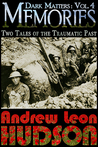
Book Review: Dark Matters: Memories by Andrew Leon Hudson

Dark Matters: Memories (Dark Matters #4)Dark Matters: Memories by Andrew Leon Hudson
My rating: 4 of 5 stars

Full disclosure: Andrew Leon Hudson is in my writers group and I have been a beta reader on several of his stories, including one that was in this volume. Still, I'll try to be objective.
Speculative fiction author Andrew Leon Hudson continues his collection of short story two-packs with this one on the theme of the Great War. The first story, "The Palimpsest", is my favorite of all his stories and follows a WWI veteran and artist as he sketches ruins in England's remote north. Strange things start to occur reminiscent of M.R. James ghost story. Hudson captures the feel of a James story quite well and the ending is powerful. Very well done.
I was less intrigued with "The Foundation", another tale of memory as it relates to the Great War. I thought the dream sequences were handled well and the overall writing was good but it lacked the punch of the other story. Perhaps I've read too much, "we must not forget" literature for this sort of thing to gut punch me anymore, especially when nothing is added to the premise. Others might find it more moving. Even if they don't, "The Palimpsest" is well worth the low price of admission.
Hudson is a writer to watch, and I hope he'll start writing longer works in the future.

View all my reviews

Thursday, 28 April 2016

Book Review: Singapore Passage Singapore Passage by Donald Barr Chidsey

Singapore Passage Singapore Passage by Donald Barr Chidsey
My rating: 4 of 5 stars

I recently discovered the all-but-forgotten pulp writer Donald Barr Chidsey when I read his novel The Flaming Island. Chidsey was a regular contributor to the pulp magazines in the 1930s, writing in a wide range of genres as many of the old pulp writers did. He spent much of his youth as a merchant seaman and wrote many stories set on the sea in various exotic locales. Later in life he earned a bit of fame as a history writer, once again focusing on the sea.

As I noticed in The Flaming Island, Chidsey is best when writing about the sea. His scenes on land are routine pulp fare, exciting and fun but not outstanding. When his characters unfurl the sails and get out onto the ocean, however, then Chidsey's prose really shines. His love of the sea and his deep knowledge of maritime life comes through in every sentence.

Luckily, Singapore Passage mostly takes place on the waves. It's the mid-19th century, and a first mate with a near-mutinous crew has to become temporary captain when his boss gets stabbed in a tavern. His goal--make the Singapore Passage with a shipment of opium before the competition. If he wins, he'll get rich and get a ship of his own. If he loses, he's stuck in his current position. Besides the crew, he's got pirates to worry about plus a female missionary on board who hates the opium trade. What's a sailor to do?

Singapore Passage is a great read, with lots of interesting detail about the East Asia trade in the Age of Sail. For example, Chinese ingots, called sycee, came in various forms, including ones that looked like a woman's slipper! There's also plenty of action, and of course some sexual tension between the first mate and the missionary. All in all, a fun little read.

View all my reviews

Wednesday, 20 April 2016

Book Review: The Tilt by M.A. Robbins

The Tilt: Book One in the Tilt SeriesThe Tilt: Book One in the Tilt Series by M.A. Robbins
My rating: 2 of 5 stars

I won this book in a Goodreads giveaway and was really excited because the premise sounded fascinating. A scientist promises unlimited energy by basically fracking into the San Andreas Fault and, of course, everything goes wrong. The world is riven by giant earthquakes that leave bottomless fissures cutting across the landscape. Now, in a post-apocalyptic Alaska, a sheriff has to fend off a Chinese invasion while suspecting the scientist might be up to his old tricks again.
Unfortunately the book went steadily downhill. Robbins has created an interesting world but never explores it. We don't learn the full effects of the tilt, nor do we get many details about society and how much technology survives. Instead we're treated to endless fight scenes. While well-written, they quickly become repetitive. Cutting out a couple would still keep this an action-packed novel while giving room for character and world development. As it is, we have cardboard characters in a two-dimensional backdrop. We also don't learn why the scientist would want to repeat the experiment that wrecked the world. Is he suicidal?
A deeper problem is the depiction of the Chinese. They are all evil, bloodthirsty, two-dimensional, and talk like Fu Manchu. It's like some Yellow Peril novel from 1905. Don't get me wrong, I'm no cringing college liberal whining about political correctness. Thugs come in all colors and it's OK to reflect that in your fiction. But when all members of a group are portrayed as menacing dangers to civilization, that's just lazy writing and you're doing real harm to real people.
It's a shame, because Robbins is a good stylist. The pacing is quick and the action scenes are well-done. With a little more thought and care this could have been a good novel. Instead it just falls flat.

View all my reviews

Thursday, 14 April 2016

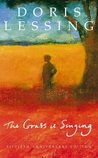
Book Review: The Grass is Singing by Doris Lessing

The Grass is SingingThe Grass is Singing by Doris Lessing
My rating: 5 of 5 stars

This is the acclaimed first novel of Nobel Prize winning author Doris Lessing and it's every bit as good as its hype. Written in the 1940s when she was living in Rhodesia (now Zimbabwe), it's a brutally honest look at how white farmers treated the African natives while slowing becoming debased themselves. One is treated to lines like this: ". . .when a white man in Africa by accident looks into the eyes of a native and sees the human being (which it is his chief preoccupation to avoid), his sense of guilt, which he denies, fumes up in resentment and he brings down the whip."

This is one of the key lines to understanding the novel. Brutality and convention are used to cover up personal weakness. Convention preys especially hard on the female protagonist, a fun-loving and superficial young woman who one day overhears her friends laughing at her behind her back because she's still not married. Desperate to be accepted, she says yes to the first man who asks, an incompetent farmer who brings her to his farm to live in squalor. The beauty of the African landscape and the harshness of its sun are both drawn beautifully, as is the slow deterioration of the main characters. The couple have no other family, no friends, no real contact with the outside world. Even World War Two is a vague rumor. The miserable wife, slowly going insane, has an unthinkable relationship with the "houseboy" that leads to a final, inevitable end.

What a first novel! Incredibly rich prose carries a terrifying portrait of people destroying themselves through their own frailty and misplaced pride. It's no wonder Lessing went on to be famous. It's a grim read, though. Now I'm going to pick up something light!

View all my reviews

Wednesday, 16 March 2016

Book Review: The Flaming Island by Donald Barr Chidesey

The Flaming IslandThe Flaming Island by Donald Barr Chidsey
My rating: 3 of 5 stars

This is a forgotten pulp novel from a now sadly overlooked author, so forgotten and overlooked that I had to add this book to Goodreads! Chidsey was a regular contributor to the pulp magazines in the 1930s, writing in a wide range of genres as many of the old pulp writers did. He spent much of his youth as a merchant seaman and wrote many stories set on the sea in various exotic locales. Later in life he earned a bit of fame as a history writer, once again focusing on the sea.
This novel is from 1959, relatively late in his fiction career as he was making the transition to nonfiction writing. It is a tale of an American demolitions expert who gets caught up in the Cuban revolution of the 1890s.
Our hero, George Heritage, thought he was going to work on a land clearance project, which shows just how clueless he is. Didn't he know there was a war on? Soon he's drafted into the revolutionary army, falls in love with a beautiful señorita, and is blowing up stuff all over the island. It's fast paced, exciting, and often funny. One interesting aspect is that the Cubans are shown in a three-dimensional, sympathetic light. The most intelligent character is black. This is rare for a novel from the 1950s (or even the 1990s). Chidsey must have learned a thing or two in his travels around the world.
As a writer myself, I can often tell when a writer is rushed or enthusiastic. Chidsey is at his best when writing about ships and the sea, and in those passages his prose rises to the level of poetry. The description of sailing into Havana at dawn is breathtaking. As was the custom with pulp writers, he was given a set word count and deadline and, like with so many pulp novels, this one feels rushed at the end with all the hero's problems getting resolved in a few short paragraphs. I can practically hear Chidsey's editor: "OK Chidsey, give me 60,000 words by the end of the month and I'll give you 500 smackers. No, I don't care what you write about as long as it's exotic and has some ships in it. You're great when you write about ships. And don't forget the beautiful foreign dames. Readers love beautiful foreign dames. Now hit that typewriter and make sure you're manuscript is on time."
Ah, for the days of the pulps!

View all my reviews

Saturday, 27 February 2016

Book Review: The Last Battle of the Civil War: Palmetto Ranch

The Last Battle of the Civil War: Palmetto RanchThe Last Battle of the Civil War: Palmetto Ranch by Jeffrey W. Hunt
My rating: 5 of 5 stars

On May 12-13, 1865, a month after the surrender at Appomattox and when the Confederacy had all but disappeared east of the Mississippi, there was a final battle in Texas. Oddly enough, it was a Confederate victory, and the Battle of Palmetto Ranch has become part of the Civil War legend.
There are many incorrect beliefs about this battle, such as that the black Union troops broke and the rebels didn't know General Lee had surrendered. In fact, the 62nd USCT was the only Union unit that didn't break, and Texas newspapers had published details about Lee's surrender more than two weeks before the battle. The author even uncovered a letter from a rebel soldier posted at Palmetto Ranch, dated a few days before the fight, talking about Lee's surrender.
This is typical of the deep and detailed research that went into this book. Hunt studies the principal people involved, how the politics south of the border affected the war along the Rio Grande, and gives us insights into the trials and sufferings of the regular soldier. It also includes clear, detailed maps, something that so many military history books lack.
If you want an interesting, quick read on a famous but still somewhat obscure episode of the Civil War, this book is for you.

View all my reviews

Sunday, 14 February 2016

Book Review: Palace Walk by Naguib Mahfouz

Palace WalkPalace Walk by Naguib Mahfouz
My rating: 4 of 5 stars

This is an involved and detailed family drama by one of Egypt's most renowned writers. It follows the fortunes of the Al Jawad family, whose patriarch runs a large shop that makes them prosperous but not rich. The setting is 1919, when the streets of Cairo are convulsed with independence demonstrations that are often fired upon by British troops.
The father, Al-Sayyid Ahmad, is an old-time patriarch in all the worst senses of the word--he keeps his wife and daughters cloistered in the home, and is domineering and sarcastic to his three sons. In the meantime, he goes out and drinks and sleeps around every night. Mahfouz is a good enough writer that he makes Al-Sayyid Ahmad strangely compelling. I hated the bastard, but just had to find out what he was going to do next.
Mahfouz gives the life of the family and its slow progression in intimate detail. This is a long novel, and work and other reading made me put it down from time to time, but the characters were so well drawn I could easily slip back into the story as if it was about some old acquaintances. It was fascinating to watch as the events of the day slowly and unstoppably pushed into this isolated family's life despite the best efforts of Al-Sayyid Ahmad. This is a book about a nation as much as it is about a family, and well worth picking up if you want to know more about Egyptian history and culture. Some people might find it a slow read; I found it more of a sedate one.


View all my reviews

Thursday, 11 February 2016

Book Review: A Long Shadow: Jefferson Davis and the Final Days of the Confederacy

A Long Shadow: Jefferson Davis and the Final Days of the ConfederacyA Long Shadow: Jefferson Davis and the Final Days of the Confederacy by Michael B. Ballard
My rating: 3 of 5 stars

This book covers the flight of Confederate President Jefferson Davis after the fall of Richmond until he was captured and put in prison. The focus is on the man himself and only touches briefly on the military situation with Generals Lee and Johnston, so if you are unclear on the military side of the war's final weeks you'll want to read up on that first.
The main thesis of this book is that Davis, through his insistence on trying to get away and continue the war from South Carolina, or the Trans-Mississippi, or Mexico, or pretty much anywhere, helped found the idea of the Lost Cause. His stubborn resistance inspired Southerners with the idea of the undying South that would some day rise again.
Ballard makes a good case, but he is hampered by the relatively short length of the book, much of which is given over to day-to-day details of the long flight away from his Union pursuers. I finished this book in only three sittings and closed it thinking it could have been much longer and more detailed. Perhaps it wouldn't have been as marketable, but it would have been a better work of history. Still, it's a good blow-by-blow account of the last day of the Confederate government.
One major complaint: Ballard keeps referring to slaves as "servants". There is a world of difference between the two. Just because 19th century sources didn't always make a distinction, doesn't mean that 20th century historians shouldn't.

View all my reviews

Monday, 1 February 2016

Book Review: Monsters, Giants and Little Men from Mars

Monsters, Giants and Little Men from Mars: An Unnatural History of the AmericasMonsters, Giants and Little Men from Mars: An Unnatural History of the Americas by Daniel Cohen
My rating: 3 of 5 stars

A fun little book on cryptozoology, the study of animals that aren't supposed to exist. You get all the usual ones here like the Loch Ness Monster and Bigfoot, as well as stranger ones like the Bunnyman of Washington DC and my personal favorite, the globster. Cohen also goes beyond traditional cryptozoology to cover obviously folkloric creatures that no one ever thought existed, known fakes such as the Cardiff Giant, and UFOs. You also get the original Men in Black, not the movie.
It's all done in a breezy, fun style that doesn't take itself too seriously. The book is a bit short, so "serious" students of cryptozoology will want to consult works by more encyclopedic researchers such as Loren Coleman and Jerome Clark. This would be good for a young adult reader, though, and is wonderful grist for a writer's mill.

View all my reviews

Wednesday, 20 January 2016

Book Review: The Job, Interviews with William S. Burroughs

The Job: Interviews with William S. BurroughsThe Job: Interviews with William S. Burroughs by William S. Burroughs
My rating: 3 of 5 stars

As a Burroughs fan, I was looking forward to reading a book about his writing techniques. Unfortunately that isn't what this book is. While you do get some information about his cutup method and other ideas on writing, most of the book is about the man's philosophy. Special focus is given to the idea of words as a virus, along with some rather overly enthusiastic ideas of using the cutup method in tape recordings for mind control. There are also passages on addiction, government control, anarchism, sex, and much more.
My main problem with this book is that it is, itself, sort of a cutup. The vast majority of the material is from his other works, so if you've read a lot of Burroughs like I have you end up discovering that much of the book isn't new to you. Someone just getting into Burroughs would probably get more out of this book than someone more familiar with his work. Even so, it's more fun to read the original works in all their craziness. This book is for completists only.

View all my reviews

Friday, 15 January 2016

Book Review: Iron Heart

Iron HeartIron Heart by Jory Sherman
My rating: 3 of 5 stars

A short and rather routine western about a teenager whose family is slaughtered by the Arapaho. He's saved by a mountain man and sets out to take vengeance on the entire tribe. The story takes place earlier than most westerns, sometime in the 1850s I think. Colorado is still called the Jefferson Territory, which is was until 1859. The descriptions of life at the time and the vast countryside are well done as one would expect from an experienced Western author like Sherman, who has some 200 books under his belt.
Our young hero goes through various adventures, becoming a deadly killer before eventually going after the chief of the Arapaho. The finale is rather perfunctory, as if the author was on deadline, and there are too many typos in the ebook edition. There was also something strange about the Native American dialog. When they are speaking English it comes out broken in B-movie Indian style. Fair enough, my Spanish can sound like that, but sometimes they talk like that even when speaking their own language to each other! Um, no.
If you're a fan of Westerns and see this on the shelf, it's worth grabbing, but there are heaps of other Westerns out there just as good.

View all my reviews
Looking for more from Sean McLachlan? He also hangs out on the Civil War Horror blog, where he focuses on Civil War and Wild West history.

You can also find him on his Twitter feed and Facebook page.