Showing posts with label reading. Show all posts

Wednesday, 19 October 2016

Book Review: Children of the Sun by Max Schaefer

Children of the SunChildren of the Sun by Max Schaefer
My rating: 3 of 5 stars

During the 1970s and 80s, the United Kingdom saw a large rise in neo-Nazi groups. One of the main figures in this was a tough street brawler named Nicky Crane. What many of his fellow skinheads didn't know, or chose to ignore, was that Crane was gay. In fact, there was a whole lot of gays in a movement that denounced gays as perverts and often participated in gay bashing.
That odd bit of history is the basis for this novel, which follows the adventures of a young gay skinhead growing up in those times, and also a gay researcher from the modern day looking into Britain's fascist past. The researcher is, one presumes, trying to figure out why so many gays ended up being neo-Nazis. Some other reviews of this book complain that this question is never answered. I suspect that's because the question is unanswerable. I don't blame the author for this because I certainly don't have an explanation for it!
I do, however, have some problems with this book, which gave me one of the most uneven reading experiences I've ever had. The story of Tony, a teenager growing up in the neo-Nazi movement of the 1970s, is riveting. We get an inside look at how groups like the National Front operated, and we get a feeling for Tony's split identity, fueled by his infatuation/hero worship of Nicky Crane.
I had no sympathy, however, for James, a modern day trust fund baby researching the movement by looking at old fanzines and leaflets in the British Library. James is obviously a stand in for the author, and we get pages upon pages of chattering class pretension about fine dinners, expensive French cider, and an unearned sense of superiority. Why is it that British writers of a certain social class can never stray far from their comfort zones? As my wife pointed out, the author was playing to the interests of his publisher's audience: "Granta readers need this reassurance." I suppose they do. It comes off as the literary equivalent of a "safe space" for rich people.
So I found myself increasingly annoyed by James, who had nothing to add to the story other than his own self-obsession. Still, the writing is excellent, and the book is illustrated with reproductions of old National Front literature that make for fascinating reading. If the author had the guts to cut out James entirely, and only keep Tony's story, this would have been a five-star book.

View all my reviews

Monday, 1 August 2016

Book Review: The Awakening by Kate Chopin

The AwakeningThe Awakening by Kate Chopin
My rating: 5 of 5 stars

This famous novel of martial infidelity still packs a punch more than a hundred years on. It starts sedately, with an unhappy wife slowly becoming aware of the source of her unhappiness while vacationing on an island off the Louisiana coast. She attracts the attentions of a young man who attaches himself to her and shows her far more affection than her aloof husband.
The landscape and society of the time of described in rich Victorian detail. While this style can get tedious, this is a short novel and I never felt I was being slowed down. In fact, amid all the social pleasantries and beautiful sunsets, there's a rising tension within the protagonist that keeps the story moing forward.
It's hard to say much more without adding spoilers, but suffice it to say that while the vacation ends, the protagonist's disconent doesn't. But what's a married mother of two to do in that time (or even ours)? Finally she takes action, and that leads to a rapid series of events that will change her life and draws her to an inevitable conclusion.
Beautifully written, haunting, and sad. A true classic.

View all my reviews

Thursday, 28 April 2016

Book Review: Singapore Passage Singapore Passage by Donald Barr Chidsey

Singapore Passage Singapore Passage by Donald Barr Chidsey
My rating: 4 of 5 stars

I recently discovered the all-but-forgotten pulp writer Donald Barr Chidsey when I read his novel The Flaming Island. Chidsey was a regular contributor to the pulp magazines in the 1930s, writing in a wide range of genres as many of the old pulp writers did. He spent much of his youth as a merchant seaman and wrote many stories set on the sea in various exotic locales. Later in life he earned a bit of fame as a history writer, once again focusing on the sea.

As I noticed in The Flaming Island, Chidsey is best when writing about the sea. His scenes on land are routine pulp fare, exciting and fun but not outstanding. When his characters unfurl the sails and get out onto the ocean, however, then Chidsey's prose really shines. His love of the sea and his deep knowledge of maritime life comes through in every sentence.

Luckily, Singapore Passage mostly takes place on the waves. It's the mid-19th century, and a first mate with a near-mutinous crew has to become temporary captain when his boss gets stabbed in a tavern. His goal--make the Singapore Passage with a shipment of opium before the competition. If he wins, he'll get rich and get a ship of his own. If he loses, he's stuck in his current position. Besides the crew, he's got pirates to worry about plus a female missionary on board who hates the opium trade. What's a sailor to do?

Singapore Passage is a great read, with lots of interesting detail about the East Asia trade in the Age of Sail. For example, Chinese ingots, called sycee, came in various forms, including ones that looked like a woman's slipper! There's also plenty of action, and of course some sexual tension between the first mate and the missionary. All in all, a fun little read.

View all my reviews

Thursday, 14 April 2016

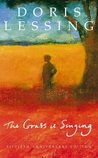
Book Review: The Grass is Singing by Doris Lessing

The Grass is SingingThe Grass is Singing by Doris Lessing
My rating: 5 of 5 stars

This is the acclaimed first novel of Nobel Prize winning author Doris Lessing and it's every bit as good as its hype. Written in the 1940s when she was living in Rhodesia (now Zimbabwe), it's a brutally honest look at how white farmers treated the African natives while slowing becoming debased themselves. One is treated to lines like this: ". . .when a white man in Africa by accident looks into the eyes of a native and sees the human being (which it is his chief preoccupation to avoid), his sense of guilt, which he denies, fumes up in resentment and he brings down the whip."

This is one of the key lines to understanding the novel. Brutality and convention are used to cover up personal weakness. Convention preys especially hard on the female protagonist, a fun-loving and superficial young woman who one day overhears her friends laughing at her behind her back because she's still not married. Desperate to be accepted, she says yes to the first man who asks, an incompetent farmer who brings her to his farm to live in squalor. The beauty of the African landscape and the harshness of its sun are both drawn beautifully, as is the slow deterioration of the main characters. The couple have no other family, no friends, no real contact with the outside world. Even World War Two is a vague rumor. The miserable wife, slowly going insane, has an unthinkable relationship with the "houseboy" that leads to a final, inevitable end.

What a first novel! Incredibly rich prose carries a terrifying portrait of people destroying themselves through their own frailty and misplaced pride. It's no wonder Lessing went on to be famous. It's a grim read, though. Now I'm going to pick up something light!

View all my reviews

Saturday, 27 February 2016

Book Review: The Last Battle of the Civil War: Palmetto Ranch

The Last Battle of the Civil War: Palmetto RanchThe Last Battle of the Civil War: Palmetto Ranch by Jeffrey W. Hunt
My rating: 5 of 5 stars

On May 12-13, 1865, a month after the surrender at Appomattox and when the Confederacy had all but disappeared east of the Mississippi, there was a final battle in Texas. Oddly enough, it was a Confederate victory, and the Battle of Palmetto Ranch has become part of the Civil War legend.
There are many incorrect beliefs about this battle, such as that the black Union troops broke and the rebels didn't know General Lee had surrendered. In fact, the 62nd USCT was the only Union unit that didn't break, and Texas newspapers had published details about Lee's surrender more than two weeks before the battle. The author even uncovered a letter from a rebel soldier posted at Palmetto Ranch, dated a few days before the fight, talking about Lee's surrender.
This is typical of the deep and detailed research that went into this book. Hunt studies the principal people involved, how the politics south of the border affected the war along the Rio Grande, and gives us insights into the trials and sufferings of the regular soldier. It also includes clear, detailed maps, something that so many military history books lack.
If you want an interesting, quick read on a famous but still somewhat obscure episode of the Civil War, this book is for you.

View all my reviews

Sunday, 14 February 2016

Book Review: Palace Walk by Naguib Mahfouz

Palace WalkPalace Walk by Naguib Mahfouz
My rating: 4 of 5 stars

This is an involved and detailed family drama by one of Egypt's most renowned writers. It follows the fortunes of the Al Jawad family, whose patriarch runs a large shop that makes them prosperous but not rich. The setting is 1919, when the streets of Cairo are convulsed with independence demonstrations that are often fired upon by British troops.
The father, Al-Sayyid Ahmad, is an old-time patriarch in all the worst senses of the word--he keeps his wife and daughters cloistered in the home, and is domineering and sarcastic to his three sons. In the meantime, he goes out and drinks and sleeps around every night. Mahfouz is a good enough writer that he makes Al-Sayyid Ahmad strangely compelling. I hated the bastard, but just had to find out what he was going to do next.
Mahfouz gives the life of the family and its slow progression in intimate detail. This is a long novel, and work and other reading made me put it down from time to time, but the characters were so well drawn I could easily slip back into the story as if it was about some old acquaintances. It was fascinating to watch as the events of the day slowly and unstoppably pushed into this isolated family's life despite the best efforts of Al-Sayyid Ahmad. This is a book about a nation as much as it is about a family, and well worth picking up if you want to know more about Egyptian history and culture. Some people might find it a slow read; I found it more of a sedate one.


View all my reviews

Monday, 27 April 2015

Book Review: Barricade by Jon Wallace

BarricadeBarricade by Jon Wallace
My rating: 3 of 5 stars

The publisher had a heap of these on the free table at the 2015 Eastercon and so I grabbed one. I was attracted by the blurb and the fact that it was post-apocalyptic, a genre I love.
The book, however, was only OK. The protagonist is a Ficial, an artificial life form who along with his fellow Ficials is trying to destroy the human race in a post-apocalyptic wasteland. Ficials have no emotions and a set task they have trouble thinking beyond, and while this could make for a boring character, John Wallace's engaging writing style kept me interested. There's an action-packed road trip across a blighted landscape that was full of thrills, but after a while became a bit wearing. In a few spots the author lost my suspension of disbelief. There wasn't much purpose to a lot of the action and the ending was poorly done. It simply ended. I don't know if a sequel is planned, but the final page felt more like a chapter ending than the conclusion of a novel.
Barricade was a fun, fast read that didn't quite satisfy. Wallace has lots of potential, however. Here's hoping he does better with his next book.

View all my reviews

Thursday, 26 February 2015

Book Review: The Day Lasts More Than A Hundred Years

The Day Lasts More Than a Hundred YearsThe Day Lasts More Than a Hundred Years by Chingiz Aitmatov
My rating: 5 of 5 stars

What a wonderful book. You won't find many novels like this one--a science fiction tale from Soviet Kirghistan that's critical of the Stalin era.
The story follows Burranyi Yedigei as he sets out to bury his friend Kazangap in the traditional cemetery of his people. As they ride across the steppe, Yedigei thinks about their life at an isolated railway junction. Stories of World War Two, romance, family, grumpy camels, traditional legends, and victims are Stalin's purges are all artfully woven together.
It's interesting that Stalin comes under criticism in this book. It was written in 1980 and apparently Stalin had fallen from grace at that point. Writers could now say things that would have gotten them killed when the dictator was alive. Aitmatov was still living in the Soviet Union, however, so he steers clear of any criticism of the overall system other than some poking fun and senseless bureaucracy.
Not far away from the railway junction, a Soviet cosmodrome is on high alert after members of an orbiting space station have reported getting into contact with aliens. This subplot doesn't add much to the book, I'm afraid, and while it does act as a way for the author to say something about human nature, it's already been said far more eloquently in the rest of the book. The book would have been just as good without the science fiction element.
The novel is too strong for this to detract from the whole. It's beautifully told and pulls you into a setting most of us have never seen. Highly recommended. It was the best book I read in 2014.

View all my reviews

Monday, 16 December 2013

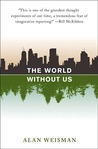
Book Review: The World Without Us

The World Without UsThe World Without Us by Alan Weisman
My rating: 5 of 5 stars

This bestselling popular science book asks the question, "What would happen to the world if we suddenly disappeared?" An interesting premise, but more interesting is a related question he also asks, namely "How have we affected the world?"
As a former archaeologist, I'm familiar with decay, but still I was surprised at how quickly many of our greatest industrial works will disappear. His long section on New York City without its army of maintenance crews was especially eye opening.
There is also much here about species extinction and the impact of our toxins on the environment. It turns out that the most harmful thing we may be doing to our planet may be the vast amount of plastic we're pumping into the ocean. Tiny indigestible bits of plastic are finding their way into the systems of all sea life, and we simply don't know how that might affect them.
Weisman is a masterful writer and he takes us around the world from old Maya ruins to primeval forests in Eastern Europe in his quest to see how the world once was, where it's going, and how it would fare without us. It's gripping reading, told at a level that any interested person can understand. My only complaint is that in my UK trade paperback edition the photos were few and poorly reproduced, thus adding little to the text. Otherwise this is an excellent book, well worth reading for anyone with an interest in science.

View all my reviews

Tuesday, 19 November 2013

Book Review: The Day of the Star Cities

The Day of the Star CitiesThe Day of the Star Cities by John Brunner
My rating: 2 of 5 stars

Even leading authors can be hit or miss, and the author of the landmark Stand on Zanzibar misses with Day of the Star Cities.
Alien cities have appeared all over the globe at the same instant that all fissile material explodes. Humanity is left in a warring, chaotic post-apocalyptic world while a new religion develops centered around the hidden aliens. There's also a lucrative black market in alien artifacts and a devoted international team of scientists trying to figure out what's going on.
The ideas for this story are intriguing, as are some of the descriptions of the alien cities and technology. Unfortunately, the book falls flat. Too many characters are introduced and not given enough depth to be distinguishable from each other. Also, theories and subplots come at a furious pace, and with all these interchangeable characters the book quickly becomes confusing.
My impression as a writer reading this was that Brunner was working on a tight deadline, something that plagued many house authors in this period of publishing. Thus his original idea is never given the space or care that could have made this a great novel.

View all my reviews

Tuesday, 29 October 2013

Reading in preparation for National Novel Writing Month

National Novel Writing Month is starting this Friday, and I'm getting busy. Not only am I mapping out the plot, setting, and characters in my head, but I've been reading to get prepared.

My novel is called Radio Hope and is a post-apocalyptic tale set in the near future. No zombies, no mutants, just a shattered world where some people are trying to pick up the pieces and others are trying to grind those pieces into dust.

So what have I been reading to get psyched up for this writing marathon? I finally picked up Hugh Howey's Wool. Yes, I'm a bit behind the curve on this one but a great book remains a great book. And what a great book it is. Surreal yet believable, with well-rounded characters you can care about. I'll be writing a review on Goodreads and sharing it here. Suffice it to say, if you have any interest at all in science fiction, grab this book!

Now I'm reading Winesburg, Ohio by Sherwood Anderson. This collection of small-town stories, first published in 1919, at first seems like an odd book to pair up with Wool, but both are essentially tales of the interactions you find in small and isolated communities. Both are character-centered. My own novel is centered around New City, one of the few settlements left after the fall. The characters in New City are trying to survive in a harsh and pitiless world yet still manage to have all the little obsessions, rivalries, frustrations, and dreams you find in a small town.

What are you reading right now? I'm always looking for my next good read!

Image courtesy Wikimedia Commons.

Tuesday, 22 January 2013

Book Review: The Beuatyful Ones are Not Yet Born

The Beautyful Ones are Not Yet BornThe Beautyful Ones are Not Yet Born by Ayi Kwei Armah
My rating: 5 of 5 stars

All the Beautyful Ones are Not Yet Born, by Ayi Kwei Armah, is an excellent read and the second-best book I read all year, after Johnny Got His Gun by Dalton Trumbo.

Armah wrote this novel in 1968, only eleven years after Ghana got its independence, and he is often considered to be from the "second generation" of African writers. The first generation wrote around the time of independence and was filled with optimism. Things went bad quickly, though, as Armah's book shows.

The story follows an unnamed man who works in a railway office. He refuses to take bribes or be in any way involved in the corruption that's enriching his friends and destroying his nation. He knows his stance is pointless, because the corruption will continue with or without him, but he stands on his principles. It's a relentlessly pessimistic book, although the writing is beautiful and one corrupt official gets a hilarious comeuppance near the end. I highly recommend it, but not if you're in a good mood.

View all my reviews

Thursday, 10 February 2011

Books for the bus

I just finished a very enjoyable book from one of my favorite authors, and it only took me a year to do it!

Why so long? Because it was my bus book. My son's school is a 15-minute ride away. When I take him to school I don't read, of course. Plus when I'm going to pick him up or coming back after dropping him off, I generally walk. So I should say my book was my "taking the bus because I'm feeling lazy and/or it's raining" book. That's why it took a year to read 204 pages.

As you can see from the illustration, the book was Ghost Towns of the American West by Robert Silverberg. Better known as a science fiction author, Silverberg has written it all, from fantasy to erotica to history. I enjoyed this book and found it to be a perfect bus companion. It follows the development of boom-and-bust mining towns in the West. Since it hops from town to town, from amusing anecdote to amusing anecdote, it's very easy to read in short bursts without losing the overall thread. A perfect bus book, in other words.

As writers we need to think about all the ways people may use our work. Not everyone sits down for an hour or two to get through a big chunk of text. I used to do that a lot more than I do now, but work and fatherhood has limited that. I bet I'm not the only one!

Thursday, 20 January 2011

Two interesting articles about ebooks

Sorry to be so quiet for the last few days, but I'm on deadline for my next military history book and busy planning my trip to Ethiopia.

Anyway, I've come across a couple of important articles on ebooks. The first is a USA Today article noting that in the first week of 2011, 19 out of the top 50 bestsellers sold more electronic copies than print copies. All of the top six did this. Various industry pundits weighed in on the significance of these figures. The main reason for the spike was that about 3 to 5 million ereaders sold over Christmas. Will people tire of their new toy or will it become a regular part of their reading experience? Only time will tell. The article also noted that while ebooks sales are going up, so are print sales. People are reading.

For some predictions on ebook development in the coming year, check out publishing CEO Michael Hyatt's Six E-book Trends to Watch in 2011. I won't steal his thunder, but if you're a writer or a reader (and I assume you fall into at least one of those categories) then you should check it out. He disproves the common mantra in writing newsgroups that traditional publishers don't "get" ebooks.

While it looks like ebooks have a bright future, I don't think print will die as quickly as some people are saying. Print sales still outstrip ebook sales by a considerable margin, even though that margin is narrowing. A sizable percentage of buyers are over fifty (a group less likely to embrace new technology) or only buy a few books a year, making them less likely to cough up more than a hundred bucks for an ereader.

The thing that will really save print, however, is POD. Print on Demand machines are getting faster and cheaper. They're already appearing at retail outlets and it's not hard to imagine them showing up in malls, train stations, airports, or other locations. If connected via the Internet to distributors, they could print just about any title. Some people will always prefer print, and POD machines make it cost effective for the publishing world to provide them.

Friday, 3 December 2010

Photo Friday: Library After Air Raid, London, 1940

What can I say that any sensitive viewer can't already feel? As a lover of books I love this photo. Trust the English to calmly browse the shelves of a bombed-out library. Chin up and stiff upper lip and all that. No wonder they won the war (with a bit of help).

I've always been impressed with how books and writing endure. During the Lebanese civil war a literary magazine was regularly published in Beirut on the border between two warring factions. During the economic collapse in Venezuela, some publishers took to printing their books on recycled cardboard. You can't stop writers from writing, or readers from reading!


[Photo courtesy Wikimedia Commons]

Wednesday, 3 November 2010

Another reason people buy books

I overheard an interesting conversation the other day. Two women were talking about Nora Roberts' new release.

One said to the other, "I tried to reserve it at the library but there were seventeen people on the list. It would take months to get it so I just went out and bought it."

"I don't usually buy books but I would in that case," the other replied.

A waiting list for popular books is nothing new at a local library, and the standard practice is to buy more than one copy of popular titles in order to reduce the wait. What I didn't realize, however, is that some frustrated readers won't wait to read it for free and will go out and buy a bestseller so they can have instant gratification!

Nothing succeeds like success. . .
Looking for more from Sean McLachlan? He also hangs out on the Civil War Horror blog, where he focuses on Civil War and Wild West history.

You can also find him on his Twitter feed and Facebook page.