Showing posts with label books. Show all posts
Thursday, 21 August 2014
Back from Worldcon!
As regular readers of this blog know, this week I was at Loncon3, aka the 72nd World Science Fiction Convention. I made lots of friends and ended up on the Iron Throne! It's good to finally get the recognition I'm due.
It was a great five days of panels, parties, readings, and meeting fellow fans. I did a signing of Radio Hope and A Fine Likeness on the 16th (my 45th brirhday) and was on a panel on refugees in fiction. For more on the con, check out the Worldcon report I did for the Black Gate blog.
Thanks for Jerome Finn for the photo!
Thursday, 9 January 2014
Book Review: Leo Africanus
Leo Africanus by Amin MaaloufMy rating: 5 of 5 stars
What a wonderful novel. This is everything a historical novel should be--rich in period detail, meticulously researched, and filled with believable characters that bring the era alive.
Based on the true story of one of the great Muslim travelers, we get to see the Songhai Empire, the capture of Egypt by the Ottomans, and the high culture and low morals of Renaissance Rome.
The real Leo Africanus is an enigmatic figure and there are large gaps in what we know of his life. Maalouf fills these with all sorts of adventures and meetings with famous people and weaves fiction and history seamlessly together.
Maalouf explains everything well and the reader is never lost despite the flurry of names and places. At times I could have used some more detail and felt that even at 360 densely set pages that it was a bit rushed. I would have been happy for it to have been twice as long!
If you like historical novels and have an interest in the Muslim world or Renaissance history, be sure to pick up this modern classic.
View all my reviews
Sunday, 22 December 2013
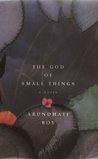
Book Review: The God of Small Things
The God of Small Things by Arundhati RoyMy rating: 3 of 5 stars
I was prepared to love this book. I'm a big fan of Indian literature and had heard many good things about this title.
I found it to be a mixed bag. While the writing was lush and beautiful, many passages were overwritten. Arundhati Roy is one of those writers who can't resist using five similes when none would suffice. Sometimes they border on the ridiculous, such as when she describes a smell coming off the river and "hovering over the city like a hat." Since when do hats hover? Sometimes they just don't make any sense, such as when she says "shock swelled in her like phantom applause in an empty auditorium."
The story jumps back and forth in time, a useful narrative device that can increase the power of a story. It doesn't here. Roy also falls into the common trap of literary authors by having everyone talk like literary authors. Even the child characters, whose dialogue is usually wonderfully childlike and distinct, sometimes slip into speaking like some English graduate student at Oxford.
This is a shame, because there's some lovely writing here and a compelling narrative. If Roy had toned down on the literary trappings this book would have been far more effective. As it stands, reading The God of Small Things is like being served a beautiful slice of Black Forest cake. It looks exquisite, smells tempting, and then you take a bite and find the chef added twice the sugar the recipe called for.
View all my reviews
Saturday, 30 November 2013
Book Review: A Dream in Polar Fog
A Dream in Polar Fog by Yuri RytkheuMy rating: 4 of 5 stars
People often say when they enjoy a book that they're sorry when it's over. I rarely say that because I'm always anticipating the next book I'll read!
With this historical novel, however, I really was sorry when it was over because I doubt I'll ever read a book like it again.
The author, Yuri Rytkheu, grew up in a traditional Chukchi settlement in Siberia in the early 20th century when that way of life was already fast disappearing. He wrote this novel in 1968.
The story follows a Canadian sailor who is seriously injured on a voyage and left behind in a Chukchi village. He adapts to his strange surroundings and comes to accept and eventually love his new life. Rytkheu uses his outsider protagonist as a way to explain the Chukchi way of life and cosmology. We're given a sympathetic, authoritative view into a culture vastly different than our own, shown with a sympathetic but not rose-tinted view. The story is well told and there are some beautiful passages about the Arctic landscape. Anyone interested in the far north or simply a good read would do well to hunt down this book.
Sadly, as far as I can tell Rytkheu never wrote another novel. He did write a few nonfiction books on his people that have been translated and I'm planning on hunting those down.
View all my reviews
Tuesday, 19 November 2013
Book Review: The Day of the Star Cities
The Day of the Star Cities by John BrunnerMy rating: 2 of 5 stars
Even leading authors can be hit or miss, and the author of the landmark Stand on Zanzibar misses with Day of the Star Cities.
Alien cities have appeared all over the globe at the same instant that all fissile material explodes. Humanity is left in a warring, chaotic post-apocalyptic world while a new religion develops centered around the hidden aliens. There's also a lucrative black market in alien artifacts and a devoted international team of scientists trying to figure out what's going on.
The ideas for this story are intriguing, as are some of the descriptions of the alien cities and technology. Unfortunately, the book falls flat. Too many characters are introduced and not given enough depth to be distinguishable from each other. Also, theories and subplots come at a furious pace, and with all these interchangeable characters the book quickly becomes confusing.
My impression as a writer reading this was that Brunner was working on a tight deadline, something that plagued many house authors in this period of publishing. Thus his original idea is never given the space or care that could have made this a great novel.
View all my reviews
Thursday, 14 November 2013
Book Review: Wool
Wool Omnibus by Hugh HoweyMy rating: 5 of 5 stars
This is, quite simply, the best science fiction book I've read in years. A post-apocalyptic tale of survivors living in a silo with no idea of the world outside, Howey manages to keep this grim, cramped setting from being dull. Howey creates a whole culture, a whole world inside the silo, showing an amazing talent for making the unreal seem real.
Of course it's the characters that make the story, and Howey's characters are believable, flawed, and sympathetic. There are also scenes of genuine tension and suspense.
MINOR SPOILERS FOLLOW
I did have a few nitpicks. I felt a bit of disappointment when it's revealed where they are. I preferred it when it was vague, because then my imagination could put the silo anywhere like in that classic of the genre, Level 7. Also, the main character's troubles with her father are never fully explained and her reunion with him seemed rushed. In addition, the villain makes a key blunder late in the book that I have trouble believing this normal careful character would make.
These minor quibbles are nothing compared to the fine writing, great characterization, and compelling setting of this landmark novel, so I'm still giving it five stars.
View all my reviews
Monday, 11 November 2013
Publishing is vast!
When I was in Madrid last week I saw a bunch of fellow writers from my old writers group. I had just finished Hugh Howey's Wool and was raving about it. This post-apocalyptic tale was indie published and went on to become a bestseller. Howey signed a juicy print-only contract with a major publisher, keeping control of the ebook rights himself. Smart man. Now there's talk of a film in the works.
I'll be writing a review later in the week so at the moment let me just say it deserves every bit of its success. I was surprised, though, when two writer friends said they had never heard of it. Both of them are science fiction writers, one of them with several publications under her belt. They're both well-read too, and certainly read a lot more in this genre than I do. Yet they hadn't heard of such a major success story. I bet I'm ignorant of many similar blockbuster science fiction novels.
Publishing has become vast. There was once a day when the majority of well-read people were familiar with any particular bestseller. Those days are long past. Now the market is fragmented, with fan bases that often don't overlap and may be entirely ignorant of each other.
How can a writer cut through this horde of new books out there and get noticed? I have yet to figure that out. The standard practice of blogging, tweeting, and networking only seem to go so far. I'm not sure anyone in this new publishing world has really figured out a magic formula.
I know one of the ingredients, though. An awesome book, like the one Hugh Howey wrote. I'm looking forward to reading the sequels.
Saturday, 16 February 2013
Book Review: Pagan City and Christian Capital
My rating: 4 of 5 stars
This academic tome is an in-depth look at Rome's architectural and social development in the fourth century AD, a time when paganism was waning and Christianity became the dominant religion.
The first half looks at how the imperial capital, replete with symbols of paganism, slowly transformed into a place of churches and the tombs of martyrs. The second half is social history, looking at the development of the aristocracy of the time and at changing attitudes towards the Roman circus.
There are surprises throughout. While more simplistic books often describe the fourth century as a time of conflict between paganism and Christianity, the reality Curran reveals was much more complex. Christians and pagans lived and worked side by side, and except for some notable examples of persecution, pagans kept most of their religious rights for much of this century.
One of the most interesting chapters was on how Christian aristocrats discouraged individuals of their class from becoming Christian ascetics. (It was all about inheritance and continuing the family line, you see). Another interesting passage studies how the pagan symbols in the Circus Maximus remained in full public view long after most temples were closed, yet gradually lost their pagan meaning to be replaced with a more general one. The statues of Victory, for example, stopped being statues of a goddess and became symbols of the idea of victory.
I found the reading a bit dense at times and the author assumes way too much knowledge. I have a Masters in archaeology (although not Classical archaeology) but didn't know all the terms Curran expected me to. Also, he quotes extensively from French, Latin, and Greek sources without translating them. The French I can do, the Latin kinda sorta, and the Greek, well. . .it's all Greek to me!
I think Curran made a serious mistake here. With a bit of extra work, he could attract a much larger readership of educated laymen rather than a tiny audience of fellow academics. Considering the interesting subject matter and the depth of work that went into this book, that's a pity.
View all my reviews
Tuesday, 22 January 2013
Book Review: The Beuatyful Ones are Not Yet Born
My rating: 5 of 5 stars
All the Beautyful Ones are Not Yet Born, by Ayi Kwei Armah, is an excellent read and the second-best book I read all year, after Johnny Got His Gun by Dalton Trumbo.
Armah wrote this novel in 1968, only eleven years after Ghana got its independence, and he is often considered to be from the "second generation" of African writers. The first generation wrote around the time of independence and was filled with optimism. Things went bad quickly, though, as Armah's book shows.
The story follows an unnamed man who works in a railway office. He refuses to take bribes or be in any way involved in the corruption that's enriching his friends and destroying his nation. He knows his stance is pointless, because the corruption will continue with or without him, but he stands on his principles. It's a relentlessly pessimistic book, although the writing is beautiful and one corrupt official gets a hilarious comeuppance near the end. I highly recommend it, but not if you're in a good mood.
View all my reviews
Friday, 18 January 2013
Book Review: Planet Big Zero
My rating: 2 of 5 stars
I bought this book because it was on the used bargain rack for 25 cents and it had a cool cover. So cool, in fact, that when my seven-year-old was rummaging through my stack of old pulps he picked this one out for me to read!
Sadly, the book doesn't match up to the cover. Back in the 1960s publishers would slap a picture of a rocket onto any old piece of trash and sell it as science fiction. This book has a hackneyed plot, cardboard characters, and inaccurate science. Why, for example, when a spaceship accelerates do the occupants fly FORWARD?
There were a few cool ideas in this book, like the evil aliens hiding out inside a nebula and that the Earthmen vs. Aliens theme is given a new twist by having each side include some loyal members of the other race. So I'm giving this two stars and facing it out on my kid's bookshelf.
I'll make sure he reads better science fiction than this, however!
View all my reviews
Saturday, 9 June 2012
Book Review: The Backworlds by M. Pax
My rating: 3 of 5 stars
This novella is a quick, easy read that acts as an intro to an upcoming series. Set in a sprawling universe inhabited by genetically modified humans tailored to their specific worlds, it makes for an interesting twist to the usual space opera. I like all the different "races" and little details such as living hair and sentient trees.
The characters are well drawn although not all of them are fully fleshed out. This isn't such a problem since the purpose of this novella is to introduce readers to the people and their setting.
The pacing dragged in the beginning. While this is supposed to be about a young man's adventures in space, he doesn't get off-world until a fifth of the way through the book. This is largely due to the author's overexplanation of every motivation and thought process. The last few pages are similarly afflicted to the point where I felt like yelling at the author "Yes, yes, WE KNOW!!!"
This is not to say M. Pax is a bad author. In fact she's quite a good one. She simply has a beginning writer's lack of confidence in her work. The protagonist is well-drawn enough that we know what he's thinking without the author having to explain every single action and emotion. Hopefully in later volumes M. Pax will be more trusting of her talent (and her readers) and let the story tell itself. She's already showing, so she can stop telling.
View all my reviews
Monday, 6 February 2012
What makes a great character
A recent tweet led me to an interesting two-part article about "What makes a great character". This is on the blog Yummy Men, Kick Ass Chicks, a paranormal romance blog. In this article, several paranormal romance authors talk about what makes a character compelling. While I have no interest in their genre, good writing is good writing and I found the advice worthwhile. Check out part one and part two.
The Reader's Digest version: characters are interesting when they are multifaceted and flawed. Pretty much all the authors said this. They also said a whole lot more, so if you're a writer, or simply interested in how your favorite characters are made, check these posts out.
Thursday, 19 January 2012
Book review: The Archaeology of Greece, An Introduction
My rating: 4 of 5 stars
I recently reread this old university textbook of mine in preparation for an assignment in Greece. Biers was one of my professors and his book was assigned for the class.
This well-illustrated book is a clear, general introduction to the topic. No single volume could ever hope to give such a broad subject full justice, but this does give the reader a good handle on the basics. Biers skips lightly over the Paleolithic, Mesolithic, and Neolithic and gets straight down to business with the Minoans. The book continues through the highlights of Greek archaeology down to the Roman period, which is only briefly discussed. Late Antique, Byzantine, and later periods are not covered.
I have only two objections to this book. Neither are major and both may have been solved with the publication of a second edition in 1996. I read the first edition so take these criticisms in that light. I found many of the citations to be rather old. Most dated to the 1970s or sometimes much earlier. Also, some of the photos, especially those of Athens taken by Biers himself, do not show the sights or the city as they appear today. As I said, the second edition may have solved these problems and brought the book more up to date.
In all, this is an easy-to-read introduction to ancient Greek art and archaeology. It's large number of photographs, some in color, the clear prose keep it from ever becoming dry.
View all my reviews
Tuesday, 15 November 2011
My next book project: Wyatt Earp, the OK Corral and the Vendetta Ride 1881-82
I've just received the signed contract for my next book for Osprey Publishing: Wyatt Earp, the OK Corral and the Vendetta Ride 1881-82! Part of Osprey's raid series, this book continues Osprey's exploration of the Wild West.
The manuscript isn't due until almost a year from now so it will be some time before it will see the light of day. Of course I'll keep you updated! The Raid series looks at military or paramilitary raids, including their planning, execution, and an analysis of their success or failure.
I've written two books in this series already, including Ride Around Missouri: Shelby's Great Raid 1863, and a book on James-Younger gang's Northfield raid that will come out next year.
Photo courtesy Wikimedia Commons.
The manuscript isn't due until almost a year from now so it will be some time before it will see the light of day. Of course I'll keep you updated! The Raid series looks at military or paramilitary raids, including their planning, execution, and an analysis of their success or failure.
I've written two books in this series already, including Ride Around Missouri: Shelby's Great Raid 1863, and a book on James-Younger gang's Northfield raid that will come out next year.
Photo courtesy Wikimedia Commons.
Sunday, 6 November 2011
Armies of the Adowa campaign gets a four-star review!
On my Civil War blog I recently mentioned that my book Armies of the Adowa Campiagn 1896: Italian Disaster in Ethiopia got a five-star review on Amazon. Well, I just got another review. This time it's four stars, and the reasons for losing a star are just fine with me. The review follows:
"I am very surprise that this subject matter, the Adowa Campaign, never made to the Osprey Campaign series. It would have made a great addition. Instead, we are treated with short verison of Men at Arms Series instead. I must ask why the author did not see fit to write an Osprey Campaign book and why he settled on this short version format instead?
"I wrote that because I found this book to be highly interesting reading material, there are a lot of facts packed into this book and it definitely deserves a longer treatment then what this series could afford. The narrative is short but well written, obviously the author did his research and provided many colorful plates on the uniforms and outfits of the two opposing sides. There are quite a few interesting photographs included including one where Italians and their African allies were being released, most of the African allies are missing some limbs of their bodies. Another interesting photo was one of two Italian survivors of the battle barely reaching back to their home base, looking more like escaped slaves then soldiers.
"Overall, its a pretty informative book that deserves a longer format of a Campaign series. Why the author settled for less is mysterious to me. Adowa campaign is a highly interesting campaign where an African power inflicted the greatest military defeat on an European power during the 19th century. Far greater defeat then Islandlwana which was British's smaller version of what Adowa turnout to be for Italy."
So his only complaint is that there wasn't more of it? I can live with that! To answer the reviewer's question, there are a couple of reasons why it wasn't part of the Campaign series. The main reason is that Osprey requires a topographic battle map for each title. I wasn't sure I could get a topo map for the Adowa battlefield. After visiting the Ethiopian Mapping Agency in Addis Ababa, my worries proved to be correct. Another reason it was in Men-At-Arms and not Campaign is that I've been working closely with the editor from the Man-At-Arms series and he offered me the title to do for his line.
So yes, Adowa deserves a longer treatment, but a couple of factors prevented me from doing it. Still, it was a fun book to write, and certainly not my last book on Ethiopia.
"I am very surprise that this subject matter, the Adowa Campaign, never made to the Osprey Campaign series. It would have made a great addition. Instead, we are treated with short verison of Men at Arms Series instead. I must ask why the author did not see fit to write an Osprey Campaign book and why he settled on this short version format instead?
"I wrote that because I found this book to be highly interesting reading material, there are a lot of facts packed into this book and it definitely deserves a longer treatment then what this series could afford. The narrative is short but well written, obviously the author did his research and provided many colorful plates on the uniforms and outfits of the two opposing sides. There are quite a few interesting photographs included including one where Italians and their African allies were being released, most of the African allies are missing some limbs of their bodies. Another interesting photo was one of two Italian survivors of the battle barely reaching back to their home base, looking more like escaped slaves then soldiers.
"Overall, its a pretty informative book that deserves a longer format of a Campaign series. Why the author settled for less is mysterious to me. Adowa campaign is a highly interesting campaign where an African power inflicted the greatest military defeat on an European power during the 19th century. Far greater defeat then Islandlwana which was British's smaller version of what Adowa turnout to be for Italy."
So his only complaint is that there wasn't more of it? I can live with that! To answer the reviewer's question, there are a couple of reasons why it wasn't part of the Campaign series. The main reason is that Osprey requires a topographic battle map for each title. I wasn't sure I could get a topo map for the Adowa battlefield. After visiting the Ethiopian Mapping Agency in Addis Ababa, my worries proved to be correct. Another reason it was in Men-At-Arms and not Campaign is that I've been working closely with the editor from the Man-At-Arms series and he offered me the title to do for his line.
So yes, Adowa deserves a longer treatment, but a couple of factors prevented me from doing it. Still, it was a fun book to write, and certainly not my last book on Ethiopia.
Tuesday, 18 October 2011
Ride Around Missouri: Shelby's Great Raid 1863 out now!

This book focuses on one of the Civil War's longest cavalry raids--Confederate cavalryman J.O. Shelby's ride up from Arkansas and through Union-held Missouri. His raiders destroyed infrastructure, skirmished with Union detachments, captured small forts, and led thousands of bluecoats on a merry chase that almost ended in disaster for Shelby at the Battle of Marshall.
This raid secured Shelby's reputation as one of the greatest raiders of the Civil War, yet it is often overlooked like so many other exciting events in the Trans-Mississippi Civil War. Two earlier raids he was on, led by General Marmaduke, are also covered.
Shelby was on Price's 1864 invasion of Missouri and is mentioned briefly in my Civil War novel A Fine Likeness. Shelby makes an appearance in the as-yet-unnamed sequel. One of the protagonists in that book is in Shelby's Iron Brigade, but deserts in order to fight the war within the war, the supernatural battle between Order and Chaos. The second book will be out sometime in 2012.
Thursday, 22 September 2011
Armies of the Adowa Campaign out now!
I've been pretty busy lately dealing with leaving Madrid and moving to Santander in northern Spain. I've also been hard at work on my Civil War blog. One bit of good news I didn't get to tell y'all was that a couple of days ago Osprey Publishing came out with my latest book: Armies of the Adowa Campaign.
This work examines the ill-fated Italian attempt to colonize Ethiopia. The Ethiopians had the greatest victory over a colonial army by a native force until that time. This record wouldn't be surpassed until the Moroccans destroyed the Spanish army and Annual in 1921. The book comes with a complete description of the factors leading up to the war, details of the battles, and some excellent and precise illustrations of the uniforms of both sides by Raffaele Ruggeri. Included are almost fifty rare photographs from the Italian archives, and some of my own photos I took while exploring the battlefield.
This book has been selling well for some time now. Osprey readers like to preorder books and it's been in the top ten of books on Ethiopia for months. I've written before about why readers preorder books and I'm glad they do.
For more on this project, check out two posts I did for the Osprey blog. Part one is about researching in Ethiopia, in which I nearly fell off a mountain, and part two is about researching in Rome, where I nearly made off with a cannon!
This work examines the ill-fated Italian attempt to colonize Ethiopia. The Ethiopians had the greatest victory over a colonial army by a native force until that time. This record wouldn't be surpassed until the Moroccans destroyed the Spanish army and Annual in 1921. The book comes with a complete description of the factors leading up to the war, details of the battles, and some excellent and precise illustrations of the uniforms of both sides by Raffaele Ruggeri. Included are almost fifty rare photographs from the Italian archives, and some of my own photos I took while exploring the battlefield.
This book has been selling well for some time now. Osprey readers like to preorder books and it's been in the top ten of books on Ethiopia for months. I've written before about why readers preorder books and I'm glad they do.
For more on this project, check out two posts I did for the Osprey blog. Part one is about researching in Ethiopia, in which I nearly fell off a mountain, and part two is about researching in Rome, where I nearly made off with a cannon!
Wednesday, 15 June 2011
It Happened in Missouri will have a second edition
I just got the contract to do a second edition of It Happened in Missouri. This is a collection of 30 tales of the Show-Me State, everything from how a 14 year-old boy founded St. Louis to Jesse James' first train robbery.This title has been selling pretty well. Lots of libraries and schools have picked it up. State history tends to be popular, at least in that state. Most purchases are either orders from institutions or bought from the local interest sections of bookshops. Thus the Amazon rankings for state histories tend to be low. Amazon rankings are usually a poor way to gauge the popularity of a book.
Anyway, my deadline isn't until the end of 2012 so this new edition won't be out until 2013. It will include two new tales and perhaps some other goodies me and my editor will cook up.
for more insights about writing history for fun and profit, check out my article: How to Break into the Burgeoning History Market.
Thursday, 5 May 2011
The Library of Forgotten Books
Shuffling between my two home bases in Oxford and Madrid last week I had a couple of hours to kill at Gatwick airport. It being past noon, I decided to spend them in the airport's pub, The Flying Horse, enjoying a last couple of pints of English real ale.
Airport pubs are soulless places, but the management at the The Flying Horse has tried to make it homey by installing big bookshelves stuffed with volumes of an age suitable for the faux country mansion decor of cheap wood paneling, dark carpet, and dim lighting.
Studying the titles I had to wonder when the last of them was read. They all seemed to be unknowns that passed into obscurity in the first month they were published. How many people really read A Girl and Her Ways by Amy Le Feuvre or Edward Henry Bickersteth by F.K. Aglianby? Did Hine's Relics of an Uncommon Attorney earn out its advance? The Six Proud Walkers almost got me with the title, but sorry F. Beedin, I prefer to hike alone.
The only familiar face in this crowd of strangers was War and Peace--in an edition old enough to be tattered but recent enough to be of no value. And it was in Russian. And only volumes three and four.
I can't decide how I feel about books being demoted to mere decoration. On the one hand, it's demeaning to the dreams of hundreds of struggling authors. They're all almost certainly dead, so I guess that's a relief. On the other hand, their only other destination would have been the rubbish skip. If books can still provide the atmosphere of refinement, don't they still have a value?
I wonder if my son will walk into an airport pub seventy years from now and see one of my own titles being used to line the walls.
Airport pubs are soulless places, but the management at the The Flying Horse has tried to make it homey by installing big bookshelves stuffed with volumes of an age suitable for the faux country mansion decor of cheap wood paneling, dark carpet, and dim lighting.
Studying the titles I had to wonder when the last of them was read. They all seemed to be unknowns that passed into obscurity in the first month they were published. How many people really read A Girl and Her Ways by Amy Le Feuvre or Edward Henry Bickersteth by F.K. Aglianby? Did Hine's Relics of an Uncommon Attorney earn out its advance? The Six Proud Walkers almost got me with the title, but sorry F. Beedin, I prefer to hike alone.
The only familiar face in this crowd of strangers was War and Peace--in an edition old enough to be tattered but recent enough to be of no value. And it was in Russian. And only volumes three and four.
I can't decide how I feel about books being demoted to mere decoration. On the one hand, it's demeaning to the dreams of hundreds of struggling authors. They're all almost certainly dead, so I guess that's a relief. On the other hand, their only other destination would have been the rubbish skip. If books can still provide the atmosphere of refinement, don't they still have a value?
I wonder if my son will walk into an airport pub seventy years from now and see one of my own titles being used to line the walls.
Sunday, 1 May 2011
Guest Post: Leather armour
Today I'm trading blogs with A.J. Walker, a medievalist and novelist who's just starting a virtual book tour for his first fantasy novel, Roots Run Deep, epublished by Double Dragon. He has a series called Medieval Mondays over at his blog and today I'm blogging over there about Medieval handgonnes. So without further ado. . .In the first chapter of my fantasy novel Roots Run Deep, a team of goblinkin are preparing for a raid on a human city.
Kip was as prepared as she could be. Like anyone who lived on the Reservation, she went armed at all times. Not that she had much. Her tattered leather jerkin gave scant protection, and for weapons she carried a flint knife and a tfaa, a traditional goblin fighting stick. A balanced, two foot-long rod carved from ironwood, the tfaa didn’t look like much, but in skilled hands it could disarm and cripple a swordsman. Prenta had gotten rid of her showy clothes and dressed in a more practical leather jerkin similar to Kip’s.
These impoverished goblinkin are wearing leather armour because they can't afford anything better and their human rulers forbid them from bearing metal weapons and armor. (This ban doesn't last, but that comes later in the story. . .) Leather armour is a staple of fantasy fiction and roleplaying games, yet many people don't realize just how common it was in medieval warfare. Even knights wore it.
Leather armour goes back to ancient times and continued in use through the Middle Ages and into the Renaissance. This picture shows the shoulder and upper arm portions of an elegant suit of leather dating to the Italian Renaissance, courtesy of the Schola Forum. As you can see, it looks much like regular metal armour, and many historians believe that it was worn as much as or even more than metal armour. A suit of plate was hot and heavy, so on the march or during a friendly tournament the knight may choose to weather cooler leather. The rank and file would also be fitted with leather and perhaps some portions of metal armour for vulnerable places such as the head and chest.
While leather was much cheaper, it provided pretty good protection. Regular soft leather wasn't much help, but combined with quilted padding provided some protection, especially against blunt weapons such as maces.
More effective was cuir bouilli--boiled leather. If you soak leather in water and then place it in boiling water, it becomes elastic and pliable. It soon begins to shrink, thicken, and harden. As it's hardening the leather is hammered onto shaped blocks to create breastplates, greaves, vambraces, and anything else. A full suit of armour could be made in this way. The 14th century French chronicler Jean Froissart claimed that it was "leather that no iron can pierce" and while that may be overstating the case, leather armour certainly gave good protection. Games such as D&D probably undervalue its effectiveness. Modern experiments show that the average sword blow wouldn't get through, although a good English longbow would make short work of a leather breastplate! This basic article (PDF) explains the technique. Also check out this thread from Schola Forum for some more insights and pictures.
The picture below from The Historians' History of the World shows some improvements on leather armour, with overlapping metal scales, discs, and rings. These were all cheaper yet pretty effective alternatives to full plate and variants of these were used from ancient times into the Renaissance.
Subscribe to:
Posts (Atom)
Looking for more from Sean McLachlan? He also hangs out on the Civil War Horror blog, where he focuses on Civil War and Wild West history.
You can also find him on his Twitter feed and Facebook page.