Showing posts with label nonfiction. Show all posts
Monday, 4 September 2017
The Most Prolific Writers Ever and How They Did It
I'm back from my regular research trip to Oxford and am now hard at work here in Madrid. One of the projects I've been working on is a nonfiction work titled Writing Secrets of the World's Most Prolific Authors. There are lots of books on increasing your word count, but none, as far as I know, focus on the actual methods of the amazing writers who manage to pen hundreds of books and thousands of articles.
I’m focusing on writers who have written at least 300 books and left behind plenty of information on their work methods. Also, they must be dead so I can look at their careers as a whole, they must have been active in the 20th century so their work is more applicable to the modern era, and they must have written in either English or Spanish so I can read their stuff. At the moment I have the following list: Isaac Asimov, Walter Brown Gibson, Corín Tellado, Marcial Lafuente Estefanía, Lauran Bosworth Paine, Ursula Bloom, Enid Mary Blyton, Barbara Cartland, Frederick Faust, and John Creasey. Other writers who have something worth quoting are given passing mention.
One interesting bit of advice comes from David Graham Phillips, who at the beginning of the 20th century worked as a journalist, pumping out hundreds if not thousands of articles. At night he wrote bestselling novels and short stories. He said of his method:
"I write every night, from about eleven until about four or five or six in the morning. Sometimes seven or eight. . .Let me urge you to work the same hours every day and never, never, never to let anything or anyone interfere between you and working at those hours. I write every night--seven days a week. I don't wait for mood or inspiration, and I don't give up because I don't begin right or am writing rubbish. I think it's fatal to give way to moods. And I'm not a bit afraid to throw away everything I've written, or to edit my stuff to the bone."
Can you think of any authors I should add? Can you suggest any good source material? This book will take a lot of research so it's going by fits and starts. I had a burst of writing when I first came up with the topic and searched through my personal library. Then I had another burst of productivity at the Bodleian Library in Oxford. I bought some reference materials I'll be using for the next month. Then I might have to wait until I get back to the Bodleian before I can do another round of intense research. So unlike most of my books, I can't say when I'll be done.
You can read more about the project and these incredible writers in an article I wrote for Black Gate.
Photo courtesy Wikimedia Commons.
Saturday, 9 April 2016
Words Matter Journalism Anthology Out Now!
I'm very happy and proud to have one of my articles from Iraq, "Video Games with a Refugee" included in the University of Missouri press anthology, Words Matter: Writing to Make A Difference. My contribution is about playing with a young Syrian refugee I met in Najaf while writing a series on Iraq. This piece won the 2013 Society of American Travel Writers Award. Here's the blurb for the book:
Newspapers and magazines have been steadily shrinking, and more and more former subscribers have gone to digital and internet sources for the news. Yet it has become increasingly clear that “short takes” don’t satisfy many readers, who still long for nuanced, long form journalism. By providing examples of classic magazine articles by professional writers, all of whom are graduates of the Missouri School of Journalism, this book fulfills the need for more sophisticated, thought-provoking essays that will resonate with both the general reader and students.
The book is divided into three broad categories: profiles, first person journalism, and personal memoirs, and includes the original articles as well as a “postscript” by the writers in which they discuss what they’ve learned about writing, journalism, and the business of getting published. Useful for students and instructors in writing programs, the book also appeals to writers interested in both the art and the craft of successful writing.
By the way, you can still read my piece on the now.defunct but still online travel blog Gadling. The article is here.
Friday, 10 April 2015
Book Review: How to Write a Western in 30 Days
Write a Western in 30 Days: With Plenty of Bullet-Points! by Nik MortonMy rating: 3 of 5 stars
Want to write a western? This book will tell you how, more or less.
Much of the advice long-time western author Nik Morton gives is good, standard fare for any beginning writer. More experienced writers will find many pages not giving them anything they haven't seen in plenty of other how-to books and will end up skimming some sections.
Really only the research and theme chapters are specific to westerns, and they go over a huge topic too quickly. There are even occasional lapses, such as the list of Confederate states that doesn't include North Carolina, Alabama, and Florida! The border states that fought on both sides are also not mentioned, even though these provide the most grist for the writer's mill. There's also a handy appendix of western publishers which is still up to date, although of course it soon will be.
So what about the "30 days" part? Morton does, indeed, give a good overview of how to write a western novel (or indeed any novel) in a month. He relies a bit too heavily on planning and outlining for this author's taste, but all writers work differently and "plotters" will like his technique.
Books on specifically writing westerns are rare, so anyone interested in dipping into the genre should check this book out. Just don't expect to get a thorough treatment.
View all my reviews
Thursday, 19 January 2012
Book review: The Archaeology of Greece, An Introduction
My rating: 4 of 5 stars
I recently reread this old university textbook of mine in preparation for an assignment in Greece. Biers was one of my professors and his book was assigned for the class.
This well-illustrated book is a clear, general introduction to the topic. No single volume could ever hope to give such a broad subject full justice, but this does give the reader a good handle on the basics. Biers skips lightly over the Paleolithic, Mesolithic, and Neolithic and gets straight down to business with the Minoans. The book continues through the highlights of Greek archaeology down to the Roman period, which is only briefly discussed. Late Antique, Byzantine, and later periods are not covered.
I have only two objections to this book. Neither are major and both may have been solved with the publication of a second edition in 1996. I read the first edition so take these criticisms in that light. I found many of the citations to be rather old. Most dated to the 1970s or sometimes much earlier. Also, some of the photos, especially those of Athens taken by Biers himself, do not show the sights or the city as they appear today. As I said, the second edition may have solved these problems and brought the book more up to date.
In all, this is an easy-to-read introduction to ancient Greek art and archaeology. It's large number of photographs, some in color, the clear prose keep it from ever becoming dry.
View all my reviews
Wednesday, 15 June 2011
It Happened in Missouri will have a second edition
I just got the contract to do a second edition of It Happened in Missouri. This is a collection of 30 tales of the Show-Me State, everything from how a 14 year-old boy founded St. Louis to Jesse James' first train robbery.This title has been selling pretty well. Lots of libraries and schools have picked it up. State history tends to be popular, at least in that state. Most purchases are either orders from institutions or bought from the local interest sections of bookshops. Thus the Amazon rankings for state histories tend to be low. Amazon rankings are usually a poor way to gauge the popularity of a book.
Anyway, my deadline isn't until the end of 2012 so this new edition won't be out until 2013. It will include two new tales and perhaps some other goodies me and my editor will cook up.
for more insights about writing history for fun and profit, check out my article: How to Break into the Burgeoning History Market.
Monday, 25 April 2011
Wednesday, 20 April 2011
Medieval Handgonnes is a bestseller!
This book covers the development of early firearms from the early 1400s until the development of the matchlock more than a century later. While early firearms are generally considered have been more hazardous to the user than the target, I uncovered convincing evidence that they were a useful addition to the medieval arsenal. No other book in the English language exits on this subject, or as far as I can tell any other language, so this project involved a lot of original research and resulted in a one-of-a-kind volume.
I've been getting lots of good reviews for this title, including a recent one from The Wargamer. Actually this title has been getting quite a bit of attention from the wargaming community. The period covered in this book is a popular one for wargamers yet from what I hear there aren't many clear rules involving handgonnes. Perhaps I should learn more about wargaming to understand my readership better!
Thursday, 10 February 2011
Books for the bus
I just finished a very enjoyable book from one of my favorite authors, and it only took me a year to do it!Why so long? Because it was my bus book. My son's school is a 15-minute ride away. When I take him to school I don't read, of course. Plus when I'm going to pick him up or coming back after dropping him off, I generally walk. So I should say my book was my "taking the bus because I'm feeling lazy and/or it's raining" book. That's why it took a year to read 204 pages.
As you can see from the illustration, the book was Ghost Towns of the American West by Robert Silverberg. Better known as a science fiction author, Silverberg has written it all, from fantasy to erotica to history. I enjoyed this book and found it to be a perfect bus companion. It follows the development of boom-and-bust mining towns in the West. Since it hops from town to town, from amusing anecdote to amusing anecdote, it's very easy to read in short bursts without losing the overall thread. A perfect bus book, in other words.
As writers we need to think about all the ways people may use our work. Not everyone sits down for an hour or two to get through a big chunk of text. I used to do that a lot more than I do now, but work and fatherhood has limited that. I bet I'm not the only one!
Tuesday, 21 December 2010
Finished my latest book!
If you're a regular reader of this blog you know I've been hard at work finishing up my book on the Adowa campaign for Osprey Publishing. I featured an Ethiopian lembd last Photo Friday as well as the book's new cover art, although I've been told that's only a placeholder image until talented Italian artist Raffaele Ruggeri finishes the color plates.Anyway, the book is now finished. My deadline was yesterday (yes, a Monday) and so I worked all through the weekend, editing until midnight on Sunday before getting up early on Monday to give it a final look before heading to the DHL office.
Now it's out of my hands and I can chill out for a time. It's always a nice feeling to finish a book. After the holidays I'll have to rev up again. My next book deadline is in February!
[Image of Ras Mekonnen kicking some colonial butt at the Battle of Amba Alagi courtesy Wikimedia Commons]
Thursday, 4 November 2010
Historical research in Missouri
Osprey is one publisher doing well in the recession thanks to its strong hold on the military history niche and its willingness to expand into new territory. Another new series, Weapons of War, includes my latest book.
I'm based in Columbia, a city in the center of the state that has the State Historical Society of Missouri and the Western Historical Manuscripts Collection, two great sources of information with very helpful staff. They're used to me and my endless questions by now! The two institutions are on the University of Missouri campus, where I took this shot of Thomas Jefferson thinking great thoughts. His leg warmers are courtesy of a local underground knitters group that likes decorating telephone poles, parking meters, and anything else they fancy. They haven't yet been named a terrorist group, but in this political climate that might be coming soon. I was surprised Jefferson's leg warmers actually lasted a whole two days before being removed!
Besides working on the book I'll also be going on a Jesse James roadtrip for Gadling. That should go online near the end of the month. My first stop will be this weekend when I visit the site of the Centralia Massacre, one of the bloodiest episodes of Frank and Jesse's war years.
Friday, 29 October 2010
Breaking into the history market
"I had a few questions for you after happening upon on article about freelance history writing that you had written.
"First, how is the market for freelance historical writing? Are places still taking, and paying, for articles? As a background, I graduated a couple years back with my BA in History and have been working as a museum curator since then; is there room in the market for someone like me to make some extra money writing articles? Are the places you listed in that article still interested in pieces?
"Second, is contacting a publisher and asking if I can submit an article the proper place to start? Or is it better to just submit an article without a first introductory contact? Do most have a call for specific types/themes of articles or is it pretty well open?
"Lastly, how critical is the need for primary sources? I understand this may sound like a naive question but I mean to pose it in a business sense not a historiographical one. If I have article ideas but struggle with finding primary sources for them, will an article based on secondary sources be acceptable? Or should I not bother unless I have primary source material?
I work for the Martin County Historical Society in Fairmont, MN. I would be primarily interested in Military History and our Local History and Stories. A lot of my collegiate research and writing was done on a wide array of Military topics while my time at the museum has focused more on local history."
OK, first thing's first. Yes, there is room for someone like you to earn money writing history. It won't be a lot of money to start with, but you can work your way up and with time and persistence you can make some decent money. As far as I know all the places I mentioned in the article are still interested in pieces. I know for a fact that Weider History Group is always open. Your job as a curator puts you in a good position because it lends you some authority as a professional historian. Always mention that when pitching articles, even if your proposal isn't about Martin County. The BA degree doesn't hurt either, but is less impressive because, as we all know, anyone with a pulse can earn a college degree. This cheapens the efforts of enthusiastic students like you and I were, but such is life.
Since you've been reading Writing World you probably know the basics about submitting a proposal, researching your market, etc., so I won't go into that here except to say don't knock yourself out writing an article, just write up a short proposal. The editor will probably tweak your idea anyway! Most history markets have some sort of niche, a region or a period or a specific subject they cover, so be sure to cater to that niche. The magazine market is very specialized. People buy magazines because they already have an idea what they're going to get.
Articles based on secondary sources are fine; many of my own articles fall into this category. That said, primary sources are a goldmine of information and make your articles more interesting. An old diary of a pioneer brings your subject to life. Quotes from period newspapers or speeches suck your readers into the time. Primary sources can lead to full articles or can be used to liven up articles that mostly rely on secondary sources. They aren't necessary, but they sure do help.
Since you want to do local and military history, and have daily access your society's archives, that's a good place to start. Perhaps your town paper would like some local history articles? Newspapers are always hungry for content. Pitch one or two ideas and if you get a good working relationship with the editor you may find yourself writing a regular column. That's happened to more than one of my colleagues. Then you might want to branch out into the magazines, either local or national.
Don't forget your biggest resource--the local historians you meet every day. I bet more than one of them has written articles and they can help with contacts, ideas, course material etc.
I hope this helps. If you have any other questions feel free to drop me a line.
Does anyone else have any suggestions for James? There's more than one professional history writer in my readership!
[In case you're wondering, the photo is of some Norman reenactors in front of Durham castle. The link leads to an article I wrote about the town]
Monday, 25 October 2010
Websites for Writers: Castles of Britain
Lise has put her years of study to good use in this well-organized site. It provides a complete run-down of the basics of castle history and architecture with numerous examples of individual castles in the British Isles. There are literally hours of reading here. If you're more of a visual writer go to the castle photo gallery for lots of inspiring photos. The Castle Learning Center has plenty of good information about castle construction, development, personnel, and daily life, and there's even an online course if you want to learn more.
So check it out if you want to add to the ever-growing body of literature of, about, or including castles. I recently added my own fuel to the fire with an article on castles in Yorkshire.
In case you're wondering, the lovely little island fort pictured above was built by Alexander Stewart, the infamous "Wolf of Badenoch ", on Loch Gamhna near Aviemore, Scotland. I talk more about that in my last article in my series on hiking the East Highland Way.
Tuesday, 19 October 2010
My latest book released today!
Osprey Publishing has released my latest book, Medieval Handgonnes: The First Black Powder Infantry Weapons.This was a fascinating and difficult book to write. I've always been interested in the early origins of the firearm and was frustrated by the total lack of any book on the subject. I had to sift through a mountain of archaeological and historical journals and crisscross Europe visiting museums to complete this project. While I'm proud of all my books, I'm especially proud of this one because it's the first book in English on the subject. As far as I can tell, it's the first book on medieval firearms in any language!
Here's a bit of background.
In the early 14th century, cannons entered the arsenals of European armies. This first generation of black powder weapons put fear into the heart of the enemy and in 1453 Ottoman artillery succeeded in breaching the once-impregnable walls of Constantinople. But cannons were slow and cumbersome and difficult to use against infantry. The first handgonnes were the answer. Dismissed by later historians as nothing more than crude tubes that shot wildly inaccurate lead balls, more recent research has revealed the true accuracy of the medieval handgonne together with its penetrative power. The handgonne was a viable weapon from its inception.
This volume, complete with detailed illustrations and color photographs, tells the story of one of the most revolutionary weapons in history. Readers will be treated to a lush collection of rare photographs and artwork from such far-flung locales as Danish National Museum and the Bayerisches Armeemuseum. Original artwork from Gerry and Sam Embleton illustrate how these weapons were used on the battlefield and reenactor photos demonstrate step-by-step how they were loaded and fired. The firing sequences were provided by The Company of the Wolf Argent and really let you see how the weapons were used in the field.[Photos courtesy Wikimedia Commons. I'd have to pay twice to reuse the museum photos I ordered for the book!]

Friday, 17 September 2010
Advantages of being a midlist author
The best thing about being a midlister is you get to write about a wide variety of subjects. These different jobs often support one another. For example, I was in Rome last week research a military history book for Osprey Publishing and at the same time wrote a travel series for Gadling. I didn't have a huge amount of time for sightseeing so I decided to focus on a single subject. The result is Vacation with the Dead: Exploring Rome's Sinister Side. I'm covering things like the Purgatory Museum, Renaissance tombs of Rome, and military museums in Rome. Upcoming posts will be on saints' relics, Christian catacombs, mummified monks, and more! My editor made a cool pinbox that I've added to the sidebar here.Another advantage of writing about many different things is that you get into interesting conversations with all sorts of people. Staying at my hotel in Rome were two young Italian guys who looked like soldiers. I asked them if they were in the army and they said yes.
"What part of the army?" I asked.
"Army, yes," they answered in halting English, not understanding the question.
"No, I mean, Alpini, Bersaglieri, Caribinari?"
Their eyes lit up. Not only did this foreigner know something about the Italian army, but he actually gave a damn! Almost instantly a bottle of fine Sardinian lager was pressed into my hands and much drinking and conversation ensued. It turned out they're members of the Alpini, Italy's elite mountain infantry. We talked about their duties and Italian military history, like the grueling battles of Isonzo fought high in the Alps during World War One. They also talked about their frustration at not being able to serve in Afghanistan. You have to be in the army three years before you can apply to go. Imagine, these guys actually want to go to Afghanistan! I hope they get a chance to kick some Taliban butt.
That's what being a writer can do. Would these two guys, half my age and barely speaking my language, have gone on a bender with me if my research hadn't given us some common ground? It just goes to show you never know who you're going to meet in the business of writing.
[Top photo courtesy Eurocopter, bottom courtesy Italian Army, both via Wikimedia Commons]
Tuesday, 14 September 2010
Historical research in Rome
Lifting up the back portion I found it to be quite well balanced and could easily roll it along the smooth marble, so easily in fact that the curator let go and I jogged away down the hall with his cannon! Of course lugging this thing across the rough terrain of the Ethiopian highlands is another matter.
We had a great time wandering around the museum, and I commented to Piero, "I can't believe that twenty minutes ago I was touching the ancient door of the Roman senate and now I'm wheeling a nineteenth century cannon down the hall."
Piero simply shrugged and said, "This is Rome."
Monday, 13 September 2010
Writing Inspiration in Rome
And what sights! How couldn't a writer be inspired by Rome? Here, for example, is the arch of the Emperor Septimius Severus (ruled 193-211 AD). Set up in the Forum, it commemorates his victories over the Parthians and Arabs.
The trip was very productive. I got the rest of the photos I needed for the Adowa book, material for a series I'll write for Gadling, and plenty of extra material I'll be posting here all this week. So join me every day for Rome Week here at Midlist Writer!
Wednesday, 25 August 2010
Hiking the East Highland Way
Last year I hiked the Hadrian's Wall Path. While that was a lot of fun the East Highland Way was more challenging. I'm not sure what my long-distance hike will be next year, but I'm sure it will be in Scotland! The far north near Cape Wrath, which is even more remote than the area I went to, looking very promising.
Monday, 23 August 2010
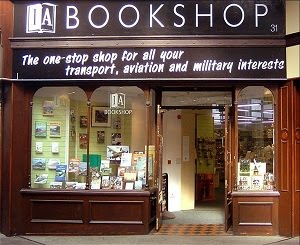
Websites for Writers: Ian Allan Publishing
This week on Websites for Writers we're looking at the homepage of specialist publisher Ian Allan Publishing. I've never worked for Ian Allan and probably never will, but like any writer familiar with them I'm impressed by their success.First off, they're long-lived. They've been around since 1942. They're also successful, with thousands of books in their backlist, excellent brand recognition, good distribution, loyal readership, retail stores, and dominance in several genres.
So what do these guys publish? Nothing you'd have ever heard of unless you have the right obsession. Do you have a copy of London Transport in the 1960s on your shelf? How about Messerschmitt Bf109 at War? Maybe a subscription to Bus & Coach Preservation Magazine?
Ian Allan does not publish bestsellers. They don't even try to publish bestsellers. Instead they focus on transport, aviation, military hardware, modeling, and Masonic books. Why? Because there are a lot of people out there who love these subjects, and they loyally support companies that publish books about their enthusiasms.
So even if Ian Allan doesn't sell a lot of copies of A Dictionary of Passenger Ship Disasters, they'll have published something that someone really wants to read. And the sheer number of their books shows just how many of these micro-genres there are. Hundreds of titles on UK steam engines. More than a hundred on canals. Books on buses. Books on helicopters. Books on collecting WWII medals.
So check out Ian Allan's website to be reassured that no matter how obscure your subject, there's a publisher for you.
Image courtesy Martin Faulks via Wikimedia Commons.
Saturday, 31 July 2010
Interview with Missouri author Dianna Graveman
As my regular readers know, I've written a fair amount of Missouri history. In fact, one of my current projects for Osprey Publishing is about Jo Shelby's 1863 raid around Missouri.So I've been very happy to make the online acquaintance of Dianna and Don Graveman, a husband and wife team who have done four books on Missouri history for Arcadia Publishing's "Images of America" series--wonderfully produced photo histories of local areas. If you're looking to publish local history, they're one of the best in the business.
The Gravemans' titles are: St. Charles: Les Petites Cotes; Missouri Wine Country: St. Charles to Hermann; Washington; and Hermann (scheduled for release September 2010). They also maintain an interesting blog called Write in the Midwest. Dianna agreed to talk to me about their projects.
What got you and your husband interested in writing books about Missouri?
Don and I have always been the type to stop at every historical marker or point of interest we encounter along the road. Don is in sales, and his territory includes part of the American West. When I taught elementary school, I looked at every opportunity to travel with him during the summer as a way to gather more information, stories, and even materials (like small-town newspapers or brochures from historical sites) for my class. I kept a travel journal and wrote down everything. Some of the people we met and places we visited ended up in articles or short stories I wrote that were later published. At some point, we became aware of Arcadia Publishing's "Images of America" series, and it just seemed a natural next step for us to propose a book on our hometown, St. Charles. One contract turned into four pretty quickly.
What's been your most interesting surprise find while rummaging through old archives? (I don't have to ask if you've had a surprising find, because archives always yield surprises!)
There have been a lot of little surprises, but the biggest was not really a "Missouri history" find. While combing through boxes of old, unlabeled and not-yet-archived photos at a historical society in a small Missouri town, we came upon a plain white envelope. Inside were several very clear black and white photos of what appeared to be the aftermath of World War II battles! Some of the photos looked like they may have been from Okinawa or Corregidor. One was taken at Pearl Harbor, possibly on V-J Day. They were startlingly clear and comprised a sort of unbound pictorial journal.
Talking with the organization's archivist, we learned that the photos were snapped by a soldier who returned to town after the war. Some years later, he donated the photos to the historical society. It is not known if the soldier also kept a written account of his experiences, or if he felt the pictures would simply speak for themselves--which, of course, they do.
What advice would you give someone wanting to get started in local history?
Make connections with the curators and archivists at local historical societies and museums. Spend as much time with them as you can. In many small towns, these historians have lived in the town all their lives, as have their parents and grandparents. If they haven't, they can put you in touch with people who have. Folks who have lived and worked in a town for several decades can give you information about a place that you can't find in books.
You and your husband are very active in promoting your work. Can you give some advice to writers about how best to market their books?
Developing and marketing four books in such a short period of time was definitely a challenge--especially since we both hold regular jobs--but Arcadia Publishing is great to work with. We were assigned a publicist and regional sales rep, but of course, these folks are working with many authors, so we also need to promote our books.
We do as many talks and book signings as possible, and we try to structure our presentations around a particular group's focus. For example, writing groups want to hear about how we secured the book contracts and obtained permission to use old photos. Library guests want to hear about the history of a town.
We maintain a web presence with posts about upcoming book releases or events on Facebook, LinkedIn, Twitter, a blog, and a website. We set up Google alerts, so we instantly know if one of our books has been reviewed or mentioned. That way, we can thank the reviewer or blogger -- but also link to that review from our own website or blog and post the link on social networking sites.
We carry copies of our business cards and at least one copy of each of our books with us everywhere; you never know when someone will express interest. We always see a spike in activity on our website the day after an event, since that URL is on our business card. We gave a large stack of promotional postcards to the curator at a museum. He, in turn, sent them to everyone on his organization's mailing list.
Can you tell us a bit about your upcoming projects?
Our fourth book focuses on Hermann, Missouri, and will be in bookstores the week of September 27. With four books released in approximately 18 months, our focus in the short term is to continue marketing them. We have been invited to give a presentation in Jefferson City at the Missouri State Archives in October, and we also want to devote adequate time to developing that presentation. However, we're already kicking around a few ideas for future books. In the meantime, I'm doing some research for a solo project--nonfiction, but not historical.
Your website mentions that you also write fiction. Tell us a bit about that.
When I was pursuing my MFA, I began a collection of realistic fiction set in the contemporary American West. It had become clear to me that nature and the preservation of nature is a strong influence in my writing, especially in the ways it can be expressed through relationships of human beings to wilderness and to each other. With the stories in that collection, I intended to blend the presence of ruggedly beautiful landscapes with the real lives of people who struggle--and sometimes fail--to uphold the courageous spirit of the American West. Lucky for me, seven of those stories have been published, and six have won one or more awards. The collection continues to evolve, and I have not yet sought a publisher. I may be getting close to that now.
Thanks for stopping by Dianna, and best of luck with your collection and future Missouri books!
Thursday, 27 May 2010
Publishing is about teamwork
I recently completed a grueling two days going over copyedits for my upcoming book on medieval handgonnes for Osprey Publishing. The copyeditor was the most meticulous person I've ever worked with, and her long list of queries, changes, and suggestions took ages to get through.She didn't just look for grammatical and spelling errors, of which there were few since I write pretty clean copy, but researched the subject and asked me about alternative spellings to medieval names and competing theories that she felt I didn't cover enough. She also had the habit of finding every possible alternate meaning to a statement and making me change them so that they weren't just clear to me (and her) but to the thickest possible reader. That doesn't mean she wanted the book dumbed down, simply made crystal clear.
I didn't mind, because it's nice to know other people care about the project! In fact, everyone at Osprey cares about the project. The series editor answers my emails in a timely fashion (a rarity in publishing), the layout people are doing a fine job, and the artist has made two beautiful paintings. Like my book on Civil War guerrillas, the handgonnes book is getting full-color artwork painted by Gerry Embleton. I'll talk more about his work when we get closer to publication in October. Suffice it to say that fans of military artwork are in for a treat.
This is how publishing should be--a team effort. Too often someone drops the ball. Either the copyeditor is over worked and underpaid, or the layout people don't read instructions about what photos should go where, or the marketing people don't market. The Osprey folks actually care about their job and do it right. This has not always been my experience in earlier stages of my career, so working at Osprey is a pleasure. Exhausting, but a pleasure.
Subscribe to:
Posts (Atom)
Looking for more from Sean McLachlan? He also hangs out on the Civil War Horror blog, where he focuses on Civil War and Wild West history.
You can also find him on his Twitter feed and Facebook page.