Showing posts with label Africa. Show all posts

Sunday, 14 November 2021

A Coup Interrupted My Writing (and other news)

Well, this hasn't happened before.

I was planning a trip to research my next book, and now I can't go because there's been a coup.

I wantd Book Six in my Masked Man of Cairo series to be The Case of the Disappearing Dervish. This would have seen Moustafa returning to his village in the Sudan to solve a mystery, with Sir Augustus and Faisal coming along to help.

Sadly, last month while I was in Alexandria and planning a trip to Khartoum in December, the military in the Sudan overthrew the transitional council set up after the fall of dictator Omar al-Bashir and have arrested the civilian prime minister. Now the army is shooting peaceful protestors in the streets.

It's a horrible situation and I feel bad for the Sudanese people. When I plan to visit a new country, I often think of the people I will meet there, future friends I don't know yet. Now those friends are in serious danger and their economy is collapsing. I hope Sudan gets through this crisis and gets the democratic government it has so long deserved.

In happier news, the print edition of The Case of the Asphyxiated Alexandrian: The Masked Man of Cairo Book 5 has just been released. You can get it on Amazon, Amazon UK, and all the other Amazon outlets as well as several other online vendors.

I'm working on several projects right now, including a ghostwritten series for a client, a trio of prequel novellas for the Cairo series detailing the adventures of all three protagonists before they met, a science fiction series, and another historical mystery series.

If you want to keep up to date with my travels and writing projects, subscribe to my newsletter. An issue comes out once every other month and contains a travel article, updates on my work, and a coupon for a free or discounted ebook. Issue 17 comes out later this week!

Tuesday, 23 October 2018

Tangier Bank Heist is out now, at an introductory price!


My latest mystery novel, Tangier Bank Heist, is out now, and as a thank you to my readers it's at 99 cents until the end of October!

Right after the war, Tangier was the craziest town in North Africa. Everything was for sale and the price was cheap. The perverts came for the flesh. The addicts came for the drugs. A whole army of hustlers and grifters came for the loose laws and free flow of cash and contraband.
So why was I here? Because it was the only place that would have me. Besides, it was a great place to be a detective. You got cases like in no other place I’d ever been, and I’d been all over. Cases you couldn’t believe ever happened. Like when I had to track down the guy who stole the bank.
No, he didn’t rob the bank, he stole it.
Here’s how it happened . . .

This title is available at Amazon US and all other Amazon stores.

Wednesday, 14 February 2018

Book Review: Look and Move on by Mohammed Mrabet

Look and Move OnLook and Move On by Mohammed Mrabet
My rating: 4 of 5 stars

Mohammed Mrabet is a Moroccan writer and artist who has lived most of his life in Tangier. This is his memoir of the days when it was an international haven for writers, artists, thieves, con men, homosexuals, pederasts, and the idle rich. Like For Bread Alone by Mohamed Choukri, it shows the flip side of this foreigner's paradise, the life of poor Moroccans struggling to survive and often having to serve the newcomers in various unpleasant ways.
Mrabet didn't escape this. At the age of sixteen, he got taken up by an American couple who vied with each other for his sexual favors. They take him to the U.S., where he has more fun with the local Puerto Ricans and blacks than he does with the staid middle class whites. There are some hilarious scenes of culture clashes in these passages. Later he meets Paul and Jane Bowles, who launch his career as a writer. They, too, take him to the States with similarly numerous results. We also get to follow Mrabet's adventures with European swingers, falling into matrimony, and his rather Zen philosophy of life.
While I found this slim volume fascinating because I've spent a lot of time in Tangier and read a great deal about its history, someone who isn't a fan of the place will miss a lot of the references. For example, Marguerite McBey is mentioned but nothing is said about her important place in Tangier society. I hope this work is republished with a long introduction to explain the context to those readers who have not learned about it from other sources.

View all my reviews

Tuesday, 6 February 2018

Cats of Cairo

Snoozing in the garden of the National Museum

Anyone who travels in the Muslim world will notice something--there are an awful lot of cats around. There's a big tradition of loving cats in Muslim society, especially Arab society. The Hadith even has a story about how Mohammad was sitting with some of his followers preaching when a cat curled up on the corner of his robe and went to sleep. When Mohammad finished his sermon the cat was still asleep, and rather than disturb it he cut off the corner of his robe.

In my last two writing retreats in Cairo, I met plenty of Egyptian cats. Here are a few.

Begging for food at a restaurant at Saqqara
Admiring the sunset along the Corniche on the banks of the Nile
The disused back staircase in my building has been taken over by cats
Admiring some historic Muslim architecture

Friday, 19 January 2018

Military History Photo Friday: The Pharaoh Ramesses II Smiting the Enemies of Egypt


This carving is from the National Museum in Cairo and shows Pharaoh Ramesses II (1279-1212 BC) smiting the traditional enemies of Egypt. Shown from left to right are a Nubian, a Libyan, and an Asiatic (perhaps a Hittite). The "smiting pose" was a popular one for pharaonic imagery. Ramesses has an axe in his hand.

Ramesses II campaigned against all three of these peoples, but is most famous for his long war with the Hittites, an empire based in what is now Turkey that had spread into the Levant and threatened Egypt. His victory at the Battle of Kadesh was recorded in a long and bombastic text that was copied onto many later buildings.

Sorry for the grubby picture and the light reflection. The National Museum needs to clean its display cases!


Tuesday, 2 January 2018

My Travel Year: A Look Back and a Look Forward


This past year has been pretty good for travel with me. I went to Egypt twice, spending a total of six weeks there to start my Masked Man of Cairo neo-pulp detective series. I made some great friends, explored Cairo more thoroughly than I did when I was first there way back in 1991, and got to see the pyramids again. Always a plus! I also had an all-too-brief trip to Tangier. I've been to that city a dozen times now and it still relaxes me. It's a quick and cheap getaway from Madrid, being only an hour's flight away, and I always seem to get a lot of writing done. You see, I hardly ever go on a real vacation. All my trips are work trips but enjoyable anyway. As usual, my family and I spent Easter and the summer in Oxford as we do every year. I get lots of research done at the university library.


So what's in store for 2018? More Egypt, certainly, and perhaps a trip to Fez, a fascinating Moroccan city I still haven't explored. For Egypt I intend to go to the western oases, which I have never seen, and perhaps up the river again to revisit the sites around Luxor and Aswan. There will be the usual trips to England and around Spain, and perhaps a few other short trips. One trip I and my family would like to do is a visit to Paris. A good friend lives there and my son is taking French in school, so he can be our translator. And who knows what else 2018 will throw at me? We shall see.

Friday, 7 July 2017

Military History Photo Friday: El Castillo de San José in Lanzarote, Canary Islands


As I mentioned on Monday, I was on vacation in Lanzarote all last week. Even though I wasn't writing, I was keeping my eye out for interesting blog post material. This week on Black Gate I blogged about the island's Piracy Museum, and next week will see another Lanzarote post as well.

And here's something for this blog, a fort called El Castillo de San José, which guarded the approach to the port of Arrecife. It was built between 1776 and 1779. The whole island is dotted with forts to protect the various harbors from pirates and rival powers such as the British.

A combination double-header outhouse and gun turret. The soldiers were apparently not shy, or just lonely.

This particular fort was actually built in a time of relative peace as a make-work project for the islanders, who were going through tough economic times thanks to a drought and a volcanic eruption that ruined the crops. Thus it earned the name Fortaleza del Hambre (Hunger Fortress).

It now houses a contemporary art museum and a cool restaurant/bar that retains its 1970s decor.

The restaurant gives a fine view of the fishing port.
The original Seventies interior is intact.
Even the stairs to the bathroom are groovy!

Monday, 3 July 2017

Back From Vacation and Back To Work


For the last eight days I've been doing something rare for me--nothing! I went on a vacation to Lanzarote in the Canary Islands to see some of my in-laws and the World's Coolest Nephew. This wasn't one of my usual research/writing trips, but an actual vacation where I didn't write for a full eight days, the longest I've gone without writing in I don't know how long. The last time I took an actual vacation was five years ago when I spent a long weekend in Wales.


It was refreshing, and now I'm back in Spain and back to work. Lots more ghostwriting, plus working on the fourth Toxic World post-apocalyptic novel, and another project I'll talk about in a later post. Lanzarote was tons of fun, but it's good to be back!

What have you been up to so far this summer?

Friday, 5 May 2017

Military History Photo Friday: Traditional African Weapons

A collection of Kpinga, a type of throwing knife used by the Azande people of southern Egypt and northern Sudan. They were equipped with various blades to increase the risk of cutting when thrown. They were high status items, only used by elite warriors (it must have taken some training to throw one accurately!) and were also given as part of the bride price when a man wanted to get married.

Last week I blogged about an interesting collection of African shields at the Ethnological Museum in Cairo. It's one of many attractions in that wonderful city that I got to visit while writing my next novel, The Masked Man of Cairo, which I'm happy to say is almost done.

Besides the shields, the museum also has a collection of African weapons, mostly, I believe, from the Sudan and captured during the Anglo-Sudan War, when the British fought the Mahdi from 1896-99. Like with the shields, I'm hardly an expert, so any help identifying these objects would be highly appreciated.

All photos copyright Sean McLachlan. Sorry about the quality of some of them. The display cases are in desperate need of a good cleaning!

Various knives and cleavers.

The sign says "sticks used by drummers" but they look like clubs to me, and are in the weapons room, after all.

A variety of spears. The broad-leafed blades are typical of those carried by the Mahdi's army.
The top broadsword was a typical type used by the Mahdi's men. The sword on the bottom has a sheath made of crocodile skin. What better way to show off your manliness?

Friday, 28 April 2017

Military History Photo Friday: African Shields

A variety of shields. The small round ones in the center are Ethiopian. One on the left has decorated brass fittings. The one next to it is made of hippopotamus hide. I believe the other shields are from the Sudan and Kenya, but I'm not sure. That skinny one on the lower left is a Dinka shield. The Dinka are from south Sudan and their shields only covered the hand, with the rod being used to parry blows. The shield on the right just above the elephant tusk is made of a turtle shell.


One of the more unusual museums I visited on my recent trip to Cairo was the Ethnological Museum. This is a very old-school museum with displays that don't look like they've been changed much in the past fifty years. It contains a good collection of costume, day-to-day objects, and weapons and armor. This includes an impressive array of East African shields that I'm showing here. In the upper floor is the Ethnographic Society with a lovely Victorian lecture hall and a sizeable library.

Located just off Tahrir Square, the heart of the famous 2011 revolution, it's one of the best guarded museums I have ever seen. Part of the grounds have been converted into a police headquarters. To get onto the property I had to go through a metal detector and show my passport. Then a cop with a machine gun escorted me to the museum. From there a museum official followed me from room to room until I left. No one is stealing these shields!

I'm far from an expert on African shields, although I am familiar with the Ethiopian forms. Unfortunately there was no signage in this room to help me. My identifications should thus be taken with a grain of salt. Any help identifying these fascinating pieces of African militaria would be highly appreciated!


The top shield is made of the plastron (belly part of the shell) of a giant turtle.
Two more shields. Like the vast majority of the shields in this collection, they are made of animal hide, which was strong enough to counter blows from clubs, arrows, and spears, but useless against bullets.
Two Ethiopian style shields. They may actually be from Sudan as this shield type was used there as well. They may, in fact, have been captured during the Anglo-Sudan War, when the British fought the Mahdi from 1896-99. Several weapons in the collection certainly come from the Mahdist army. I'll be showing those in a later post.

Tuesday, 28 March 2017

Travel Tuesday: Some Tangier Locations From My Novel

"An old man in a brown djellaba hobbled up the hill, his face obscured under the pointed peak of his hood. Tom could tell the man was old only by the way he moved—stiff and slow, yet sure, one foot after another as he ascended the smooth, steep slope of bare stone, rising up over the lip and silhouetted by the water like some pagan sea god. "

When I was writing my novel, The Last Hotel Room, I spent a few months living in Tangier to get the setting and details right. The novel centers around Tom, a broke American who has lost everything and is stuck in Morocco while the last of his money runs out. He's decided to kill himself at that point, but soon finds himself a precarious income helping a crooked cop extort money from tourists. He used much of this money to support Asif, a Syrian refugee boy who's living alone in Tangier.

My publisher, Kindle Press, has put the ebook edition on sale for 99 cents on the Amazon store through April 3. To celebrate, I thought it would be fun to share some of my photos of Tangier along with associate quotes from the text. They're in chronological order. Enjoy!

"On the days he didn’t have tea with Mohammed, he would round the corner to the Petit Socco and sit at one of the cafés, either the Central, with its wicker chairs and awning, or the Tingis, with its little patio on the high end of the Socco, looking down across the plaza’s length."
"The muezzin’s call lilted over the medina, to be picked up by another muezzin in a mosque further away. The alleys echoed and reechoed with their mingled songs as half a dozen mosques near and far sang out the same song a few words apart from one another."
"The tower was square and made of flat bricks faced with a thick coating of plaster, most of which had flaked away. It would take some time to get the details right in his drawing; it was a bit like the tile work on the mosque but with no regular pattern. The general shape looked easy enough: square with saw-toothed battlements on top. The whole thing listed a little over the cliff. Five centuries of Atlantic rain and wind had gnawed away at the cliff until it reached the base of the tower and then taken a big bite out of the tower’s base. As he watched, a couple of teenage boys popped out of its open front (the wall having tumbled down the precipice long ago), edged around the top of the cliff, and sauntered past him."

"Straight ahead the slope plunged steeply down, allowing them an open, sweeping view of the Strait of Gibraltar glittering in the sunset. Asif stepped out to the edge of the slope, looked over his shoulder at Tom with a smile, and then stared out over the water. Tom stepped up beside him and stared too, resting a hand on his shoulder."
“That is the boat from Tarifa, in Spain,” Asif said quietly, pointing at the catamaran. “So easy for them.”
“Spain looks close,” Tom said.
“Fourteen kilometers. Can you get me on the ferry, Tom?”
“You don’t have a visa. They’d never let you on board and they won’t listen to me. There’s nothing I can do. I’m sorry.”
Asif looked disappointed but not surprised.
“I afraid to go the other way,” he whispered, then turned and headed back through the gate. Tom followed, feeling helpless.

Saturday, 24 December 2016

Back from Tangier, headed to Italy!

I just got back from a three-week writing retreat in Tangier. The weather was cold and rainy, so I didn't see much of the countryside, but I did get a lot of writing done, saw a few things I hadn't discovered before like a historic synagogue, and spent time with old friends.

My family came down for part of it and the weather miraculously cleared. We got to take some long walks through the city and enjoy one of my favorite cafes, Cafe Hafa. It's set on a steep slope overlooking the Strait of Gibraltar, with the seats practically clinging to the cliff!

Now I'm back in Europe and rediscovering the joys of central heating. We're off for five days to Italy right after Christmas. We're going to stay in Bologna and use it as a base to explore Florence and Ravenna. Have a safe and happy holiday and I'll post some pictures once I get back!

Wednesday, 14 December 2016

Book Review: Days, A Tangier Journal

DAYS TANGIER JRNLDAYS TANGIER JRNL by Paul Bowles
My rating: 3 of 5 stars

This short work only took me two good sittings to get through but I enjoyed it. Paul Bowles spent much of his life in Tangier, and near the end of his sojourn wrote this journal. It contains some interesting observations of Arab life and the lives of the various oddballs who passed through Tangier, all written in the author's inimitable style. You need to be well-versed in Bowles and Tangier history to catch all the references, however, so this is a book more for enthusiasts rather than the general reader. Someone exploring Bowles beyond The Sheltering Sky would be better off checking out his other novels and short stories.

View all my reviews

Tuesday, 31 May 2016

Back from Tangier!


I just flew back from Tangier, and boy are my arms tired!

Actually it's my fingers that are tired from all the writing I did. Now that The Last Hotel Room is up for nomination on Kindle Scout (please vote!) I've been working on some new projects in my regular Moroccan writing retreat. The first is a ghostwriting project that takes the characters to Morocco, plus I'm also writing a Western. Yeah, it takes some stretching of the imagination to do that one while living in a Moroccan medina.

Anyway, I had a great time as usual, seeing old friends and making some new ones. Being away from email and editors helped me focus on the writing, getting 4,000 words done on most days. While I write for a living and usually have a good daily word count, when I'm in Madrid there always seems to be some sort of distraction or unavoidable timesuck that keeps me from usually hitting so high.

So what's next for the traveling writer? I might have a quick trip here in Spain this month, but otherwise I'll be in Madrid until mid July, when we head up to Oxford for our usual summer stay. After that maybe Turkey and definitely Tangier!

Monday, 16 May 2016

Off to Tangier!

I'm heading down to Tangier this morning for one of my regular writing retreats. I'll be there for two weeks and probably take a trip to the Atlas Mountains as well. So I won't be on this blog much, but I will be trying to promote my Tangier novel, The Last Hotel Room, which is up for voting on Kindle Scout. Click on the link and check it out.

If you vote for it and Amazon decides to publish it, you get a free copy and I'll donate $500 to a charity to help refugees. There's some stiff competition, so winning is far from assured!

See you when I get back!

Monday, 18 April 2016

Blurb and Cover Help Please!


It's that time again, when I ask my blog readers for help with the cover and blurb for my next book. This one is a bit different because I'm submitting it to Kindle Scout, where it can be voted on by Amazon customers. The books with the highest votes are considered for publication by Amazon's imprint, with a $1500 advance and 50% royalties. To submit, I have to have a one-liner of 45 characters or less and a book description of 500 characters or less. Here goes!


The front line of the refugee crisis


He came to Tangier to die, but life wasn’t done with him yet.

Tom Miller has lost his job, his wife, and his dreams. Broke and alone, he ends up in a flophouse in Morocco, ready to end it all. But soon he finds himself tangled in a web of danger and duty as he’s pulled into scamming tourists for a crooked cop while trying to help a Syrian refugee boy survive life on the streets. Can a lifelong loser do something good for a change?

$500 of my advance will go to a charity for Syrian refugees.

So what do you think of the cover, one-liner, and blurb? This will be going into the Literature & Fiction section.

Thursday, 14 April 2016

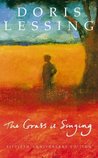
Book Review: The Grass is Singing by Doris Lessing

The Grass is SingingThe Grass is Singing by Doris Lessing
My rating: 5 of 5 stars

This is the acclaimed first novel of Nobel Prize winning author Doris Lessing and it's every bit as good as its hype. Written in the 1940s when she was living in Rhodesia (now Zimbabwe), it's a brutally honest look at how white farmers treated the African natives while slowing becoming debased themselves. One is treated to lines like this: ". . .when a white man in Africa by accident looks into the eyes of a native and sees the human being (which it is his chief preoccupation to avoid), his sense of guilt, which he denies, fumes up in resentment and he brings down the whip."

This is one of the key lines to understanding the novel. Brutality and convention are used to cover up personal weakness. Convention preys especially hard on the female protagonist, a fun-loving and superficial young woman who one day overhears her friends laughing at her behind her back because she's still not married. Desperate to be accepted, she says yes to the first man who asks, an incompetent farmer who brings her to his farm to live in squalor. The beauty of the African landscape and the harshness of its sun are both drawn beautifully, as is the slow deterioration of the main characters. The couple have no other family, no friends, no real contact with the outside world. Even World War Two is a vague rumor. The miserable wife, slowly going insane, has an unthinkable relationship with the "houseboy" that leads to a final, inevitable end.

What a first novel! Incredibly rich prose carries a terrifying portrait of people destroying themselves through their own frailty and misplaced pride. It's no wonder Lessing went on to be famous. It's a grim read, though. Now I'm going to pick up something light!

View all my reviews

Tuesday, 29 March 2016

Travel Tuesday: Obama in Ethiopia


The American elections are in full swing and it has to be the most unpredictable race I've seen since I started paying attention in the 80s. But whoever wins, one thing is for certain--Obama will leave the White House in November. I wrote about his nomination way back in 2008 in a strangely prescient post.

Love him or hate him, Obama is a historic president, and it isn't just Americans who think so. When I was in Ethiopia I saw pictures of him all over. Above is the Obama Hotel near Addis Ababa. I didn't get to stay there, so I can't tell you if the accommodations filled me with hope or if they really serve Johnny Walker. When I was in Harar in eastern Ethiopia I came across these cool Obama pens, imported from Kenya. Actually they were just standard ballpoint pens with Obama's name printed on them. I think I still have a couple of those around somewhere. I also gave one to a woman who worked on his campaign. She got a chuckle from that.

Next year will we see a Trump Hotel or Clinton pens in Africa? I don't think so!


Tuesday, 22 March 2016

Travel Tuesday: Little Details from Famous Sites


When I'm traveling, I like to get shots of the little details. Of course I get the big scenes too, but those little details are often just as interesting. Last week on the Black Gate blog I wrote about Lalibela, an amazing UNESCO World Heritage Site in Ethiopia. Back in the 12th century, the Ethiopians constructed eleven magnificent churches by cutting them out of the bedrock. That's right, they didn't build up, they dug down!

Lalibela is an impressive site, and in the post I linked to above I published some views of the exterior and interior of the churches. I also got some more intimate shots. The above photo shows the lock and bolt on one of the church doors. I like how the indirect sunlight brings out the texture of the wood. Below is a shot of some Ethiopian crosses for sale in a nearby shop. Lalibela is a major pilgrimage site for Ethiopian Christians and the distinct Ethiopian crosses are popular mementos for Ethiopians and foreigners alike. I like how the red background really brings out the brass of the crosses.

So the next time you're at the Eiffel Tower of the Pyramids, don't miss the little details!


Friday, 22 January 2016

Military History Photo Friday: Colonial Forts in Morocco


This shot shows the Casbah de la Cigogne, a 17th century Spanish fort protecting the harbor of Larache in Morocco. The coastline of Africa is studded with old colonial forts, many of which are falling into decay. This one is now a hangout for the local drug addicts. You can read more about the fort and the city it protected in a post about Larache I did for the Black Gate blog.

A view of the Casbah de la Cigogne from the seaside. Photo courtesy user Dans via Wikimedia Commons. When we were there the sun was right behind the fort so all I got was a silhouette. Timing is everything in photography!

Below is part of the 15th century Portuguese fortifications in Asilah, a notorious pirate haven on the Atlantic coast. For more on this cool spot, check out my Black Gate post on Asilah. I blog every Wednesday on Black Gate, usually on travel mixed in with the occasional book review or con report.


For more on colonial forts in Morocco and elsewhere, check out the excellent website Colonial Voyage. They have a good article on Portuguese forts in Morocco.
Looking for more from Sean McLachlan? He also hangs out on the Civil War Horror blog, where he focuses on Civil War and Wild West history.

You can also find him on his Twitter feed and Facebook page.